Use this flooring quote guide to compare materials, labor, prep, and warranties, then choose an estimate that fits your Northern Colorado home and budget.
Laminate vs Engineered Wood for Your Home
A floor can look perfect under showroom lighting and still be the wrong choice for your household. The real decision in laminate vs engineered wood comes down to how your family lives: muddy dog paws at the back door, kids dropping toys, dry winter air, busy mornings, and the budget you want to protect.
Both options can deliver the warm, wood-look style homeowners want without the price and maintenance demands of traditional solid hardwood. But they are built differently, wear differently, and make sense in different rooms. Knowing where each one shines helps you choose a floor you will still feel good about years from now.
Laminate vs Engineered Wood: The Key Difference
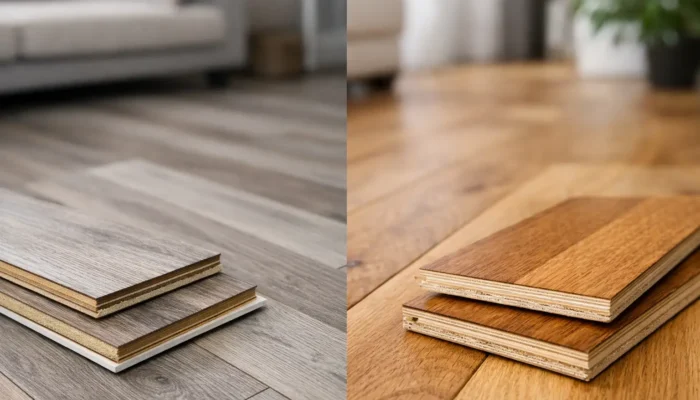
Laminate flooring is a layered product with a high-density core, a photographic wood-look design layer, and a tough clear wear layer on top. The surface can convincingly mimic oak, hickory, maple, and other hardwood species, including natural-looking grain patterns and textured finishes. It is not real wood, but many of today’s quality laminates are far more realistic than homeowners expect.
Engineered wood has a top layer of real hardwood called a veneer. Beneath it are layers of plywood or other wood-based material designed to add stability. Because the visible surface is genuine wood, engineered flooring brings the character, variation, and feel that comes with a natural hardwood floor.
That construction affects almost every part of the buying decision. Laminate is usually the tougher choice against day-to-day scratching and impact. Engineered wood delivers the more authentic wood experience and may offer the ability to refinish, depending on the thickness of its veneer.
When Laminate Makes the Most Sense
Laminate is a practical choice for active homes that need a hard-working surface at a manageable price. If you are replacing worn carpet throughout a busy living area, updating a rental property, or want a wood look without worrying about every small scrape, laminate deserves serious consideration.
Built for busy family life
A quality laminate wear layer can stand up well to pet nails, dropped toys, chair movement, and regular foot traffic. That does not mean it is indestructible. Deep gouges and sharp impacts can still damage it. Still, it generally handles surface scratching better than many real-wood finishes.
For families with children and pets, this can be a major advantage. You get a clean, consistent floor that is easy to maintain with regular sweeping and manufacturer-approved cleaning products. It is also comfortable for everyday living without the upkeep concerns that can come with natural wood.
Strong value for larger projects
Laminate often costs less than engineered wood in both material and installation, although pricing varies by product quality, room layout, and subfloor conditions. That difference can add up quickly when you are flooring several bedrooms, a hallway, and a main living space.
The right laminate does not have to look like a compromise. Wider planks, embossed textures, low-gloss finishes, and well-matched trim can create a polished, high-end appearance. The key is choosing a product that fits the home, then having it measured and installed correctly.
Watch water and seams
Water performance is where homeowners need to read beyond the label. Some modern laminate products have improved water resistance and can handle routine spills when cleaned quickly. That is helpful for kitchens, entryways, and family rooms.
However, water-resistant is not the same as waterproof. Moisture that sits too long or works into seams can cause swelling or edge damage. Laminate is usually not the first recommendation for full bathrooms, laundry rooms with frequent water exposure, or areas with a known moisture issue. A proper moisture assessment matters before any new floor goes in.
Why Homeowners Choose Engineered Wood
Engineered wood is for homeowners who want a real hardwood surface but need more stability than a solid hardwood plank may offer. It is especially appealing when the goal is a warm, lasting finish in a dining room, living room, primary bedroom, or open-concept main level.
The natural look is real
No printed pattern can fully duplicate real wood’s grain variation, knots, mineral streaks, and depth. With engineered wood, every plank has a genuine hardwood surface. That gives the floor a more natural visual presence, particularly in rooms with plenty of daylight.
It also gives you more design flexibility. You can choose species, stain tones, plank widths, and finishes that complement a traditional home, a modern update, or a rustic Northern Colorado style. If authentic wood is the priority, engineered flooring is the stronger contender.
Better stability than solid hardwood
Colorado homes see seasonal shifts in humidity, especially during dry winters. Wood naturally expands and contracts as conditions change. Engineered wood is built in cross-layered construction that helps reduce movement compared with solid hardwood.
That does not make it immune to moisture or climate changes. It still needs appropriate indoor humidity, careful installation, and prompt cleanup of spills. But for many homes, engineered wood offers a smart middle ground between the beauty of solid hardwood and the practical stability homeowners need.
Refinishing may be possible
One of engineered wood’s potential long-term advantages is refinishing. Some products have a thick enough veneer to be sanded and refinished one or more times, while thinner veneers may not be suitable for a full refinish. This is not a detail to guess about when choosing a floor.
Ask about the specific product’s veneer thickness and manufacturer guidance. If you are selecting engineered wood because you expect to refresh it decades from now, that question should be part of the conversation from the start.
Cost, Durability, and Maintenance Compared
Laminate is usually the more budget-friendly path, particularly for homeowners who want a durable wood look across a large area. Engineered wood often costs more because it includes real hardwood, and premium species or thicker veneers can raise the price further.
On scratch resistance, laminate frequently has the edge. Its protective top layer is designed for everyday abrasion, which is valuable in homes with dogs, kids, and heavy traffic. Engineered wood can scratch and dent more easily, just like solid hardwood, though quality finishes and careful furniture protection make a meaningful difference.
On repairability, engineered wood can have an advantage. A damaged laminate plank is generally replaced rather than refinished. With engineered wood, minor scratches may be touched up, and some floors can eventually be refinished. The trade-off is that real wood asks for more care along the way.
Maintenance for both is straightforward when done properly. Sweep or vacuum regularly using a hard-floor setting, clean spills promptly, and avoid soaking the floor. Skip steam mops and harsh cleaners unless the product manufacturer specifically approves them. Use mats at exterior doors and felt pads under furniture to prevent unnecessary wear.
Installation Can Change the Right Answer
The best flooring material can still disappoint if the installation does not account for the home itself. Subfloor flatness, moisture levels, transitions between rooms, existing floor height, and the location of appliances all affect the finished result.
Laminate is commonly installed as a floating floor, meaning the planks lock together and sit over an underlayment rather than being fastened to the subfloor. Engineered wood may be floated, glued down, or nailed down depending on the product and installation conditions. Each method has benefits, but the right one depends on your space.
This is why an in-home measurement is more useful than choosing from a small sample under store lights. Seeing the samples next to your cabinets, paint, trim, and natural light makes color selection easier. Measuring on site also helps identify concerns before they turn into surprise costs or delays.
Which Floor Is Right for Your Room?
Choose laminate when scratch resistance, lower upfront cost, and easy everyday durability lead your list. It is often an excellent fit for bedrooms, hallways, living rooms, play areas, and active family spaces where a wood look matters but a real-wood surface is not essential.
Choose engineered wood when you value authentic hardwood, natural variation, and the possibility of refinishing. It is a strong choice for formal living areas, dining rooms, bedrooms, and main-level spaces where you want the floor to become part of the home’s long-term character.
For kitchens, the answer depends on your household. A water-resistant laminate can work well for careful homeowners who clean spills quickly. Engineered wood can also work beautifully, but it needs a realistic expectation that water, pet bowls, and heavy use require attention. In bathrooms or high-moisture spaces, another flooring category may be the safer choice.
A good flooring decision is not about picking the most expensive option or the trendiest color. It is about matching the floor to the way your home actually works. For homeowners in Fort Collins, Loveland, Greeley, and surrounding Northern Colorado communities, comparing samples in your own rooms is often the fastest way to see whether laminate or engineered wood feels like the better fit. The right floor should support your life, your style, and your budget from the first step through years of everyday use.

Related Posts