Use this flooring quote guide to compare materials, labor, prep, and warranties, then choose an estimate that fits your Northern Colorado home and budget.
Luxury Vinyl Plank for Bathrooms: Worth It?
A bathroom floor has a rough job. It deals with splashes, steam, wet feet, dropped products, and constant cleaning. That is exactly why so many homeowners ask about luxury vinyl plank for bathrooms. They want something that looks better than basic sheet vinyl, feels warmer than tile, and does not create a budget problem halfway through the remodel.
The short answer is yes, luxury vinyl plank can be a very smart bathroom flooring choice. But it is not automatic. Some products perform much better than others, and the installation matters just as much as the material. If you want a bathroom floor that looks sharp and holds up to real family life, the details matter.
Why luxury vinyl plank for bathrooms is so popular
Bathrooms used to force a compromise. You either chose tile for water performance and gave up some comfort, or you chose a softer, lower-cost option and worried about durability. Luxury vinyl plank changed that equation for a lot of homeowners.
It gives you a wood-look floor without the moisture concerns that come with real hardwood. It is also typically more forgiving underfoot than ceramic or porcelain tile. On cold mornings, that matters more than people expect. For busy households with kids, pets, and a schedule that does not leave room for high-maintenance finishes, LVP often hits the sweet spot.
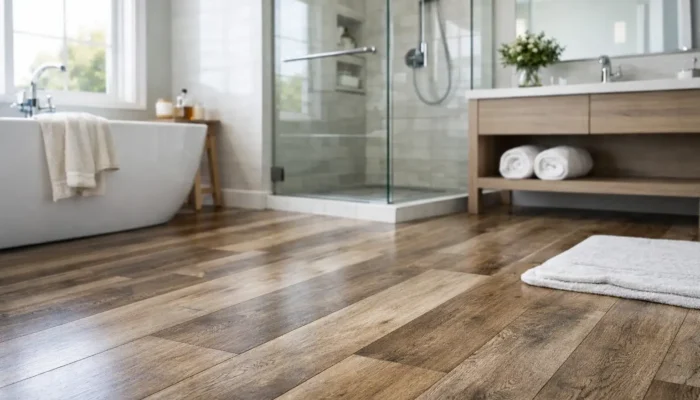
The visual side matters too. Today’s better vinyl plank products do not look like the plastic flooring people remember from years ago. Many have realistic grain patterns, matte finishes, and color variation that fit both modern and traditional bathrooms. If you want a clean spa look, a warm natural oak style, or a darker contemporary floor, there are strong options at several price points.
What makes bathroom flooring different
A bathroom is not the same as a kitchen, hallway, or living room. The moisture exposure is more concentrated, and it is repeated every day. That means your flooring choice needs to account for more than surface spills.
Steam from showers can affect the room over time. Water can sit around the tub, toilet, or vanity. Hair tools, cleaners, and cosmetics also create wear that is different from other spaces. In a hall bath or kids’ bathroom, there is usually more traffic and a lot less patience for delicate materials.
That is where luxury vinyl plank for bathrooms can perform well, but only if you choose a product designed for wet areas and have it installed correctly. Water resistance is the headline feature, but waterproof construction, tight seams, and proper edge treatment are what make the floor hold up in real use.
The biggest advantages of LVP in a bathroom
The strongest selling point is moisture performance. Many modern luxury vinyl plank products are waterproof, not just water-resistant. That means the planks themselves are built to handle moisture without swelling the way wood or some laminates can.
Comfort is another major reason homeowners choose it. Tile can feel hard and cold. LVP has a little more give, which can make a bathroom more comfortable for daily use. That matters for families getting ready in the morning and for anyone who spends time at the vanity.
Cost is also a big factor. Bathroom remodel budgets add up fast once you include vanities, fixtures, paint, and labor. LVP can deliver a high-end look at a more manageable price than many tile installations, especially when you factor in labor. For homeowners trying to improve the room without overspending, that value is hard to ignore.
Maintenance is simple, which is another real-world win. Most bathrooms do better with a floor that can be swept, wiped, and cleaned without special products or extra fuss. If you want something practical that still looks finished and current, LVP checks that box.
Where luxury vinyl plank for bathrooms has limits
There are trade-offs, and a good flooring recommendation should say that plainly.
First, not every LVP product is equal. A bargain plank with a thin wear layer may look fine on day one but show wear faster in a bathroom that gets heavy use. Cheaper products can also have less convincing visuals and weaker locking systems. When moisture is part of the equation, that matters.
Second, bathrooms are small spaces where installation errors show up quickly. Gaps around the toilet flange, poor cuts near the tub, or uneven subfloor conditions can lead to movement, edge problems, or places where water can work its way down. The material may be waterproof, but the floor system still depends on a solid install.
Third, if you love the premium feel of real stone or the long-term resale appeal of a beautifully tiled primary bath, LVP may not be your first choice. It can look excellent, but it is still a practical flooring product, not a luxury stone replacement in every sense. For many homes, that trade-off is completely worth it. For some high-end remodels, it depends on the goal.
What to look for before you buy
Start with waterproof construction. That should be a baseline for a bathroom. Then look at the wear layer, because that tells you a lot about how the floor will handle daily life. A stronger wear layer usually means better long-term performance against scratches, scuffs, and cleaning wear.
Next, pay attention to texture and finish. Bathrooms can get slippery, so an overly glossy floor is usually not the best choice. A matte or low-sheen finish with some texture tends to feel more natural and more practical.
Thickness can matter too, but not always in the way people assume. A thicker plank can feel more substantial and may help with sound and comfort, but overall performance also depends on core construction and installation quality. A well-made product with the right backing and proper prep often outperforms a thicker but lower-quality option.
Style should come last, not first. That sounds backward, but it saves money and frustration. Once you narrow the field to products that can actually perform in a bathroom, then choose the color and look that fits your home.
Installation matters more than most people think
A bathroom is one of those spaces where the finish work separates a floor that looks custom from one that looks rushed. The subfloor needs to be flat and sound. Transitions need to be clean. The perimeter details around tubs, vanities, and toilets need to be handled carefully.
This is also where homeowners can get tripped up by the promise of easy floating floor installation. In a spare bedroom, a small mistake might stay hidden. In a bathroom, moisture and tight cuts expose problems faster. That is why working with an experienced installer often pays off, especially if the room has older subfloors or unusual layout challenges.
For homeowners who want the process to feel simpler, in-home shopping and measuring can make a big difference. Seeing samples in your actual bathroom lighting, next to your vanity color and wall paint, usually leads to better decisions than guessing under showroom lights.
Is LVP right for every bathroom?
Not always, but it works for a lot of them.
In a guest bath, powder room, or kids’ bathroom, luxury vinyl plank is often an easy yes. It gives you durability, lower maintenance, and attractive style without pushing the budget too far. In a primary bath, it can still be a great fit, especially if comfort, speed of installation, and value are priorities.
If the bathroom has a curbless shower, frequent standing water, or a design goal centered on premium natural materials, you may want to compare LVP with tile more carefully. The right answer depends on how the room is used, how much moisture it sees, and how much you want to invest.
That is why the best flooring choice is usually not the one with the best marketing. It is the one that fits your household, your budget, and your remodel plans.
The smart way to choose
If you are considering luxury vinyl plank for bathrooms, focus on products built for moisture, realistic styling, and long-term wear. Then make sure the installation is treated like part of the product, not an afterthought. That combination is what gives you the look you want and the performance you actually need.
For many homeowners, the best result comes from seeing options at home, getting measured on site, and talking through the trade-offs with someone who installs these floors every day. That is how you avoid overbuying, underbuying, or ending up with a floor that looked good on a sample board but does not fit the room.
A bathroom remodel should solve problems, not create new ones. The right floor makes the room easier to live with every single day, and that is usually the upgrade people appreciate most after the project is done.

Related Posts