
Use this flooring quote guide to compare materials, labor, prep, and warranties, then choose an estimate that fits your Northern Colorado home and budget.

Guide to Laminate Floor Durability for Busy Homes
A laminate floor can look like a smart, affordable upgrade on installation day, but its real value shows up years later: after muddy dog paws, dropped toys, busy dinners, chair legs, and Colorado winters. This guide to laminate floor durability explains what actually helps a floor hold up, where laminate has limits, and how to choose a product that fits the way your family lives.
Laminate is not one single level of quality. Some products are made for light-use bedrooms, while others are designed to handle active family rooms, hallways, kitchens, and homes with pets. Looking beyond color and price is how you avoid replacing a floor sooner than expected.
What Makes Laminate Flooring Durable?
Laminate flooring is built in layers. The clear top layer, often called the wear layer or overlay, protects the printed design from scratches, scuffs, and everyday wear. Under it is the decorative image layer, followed by a dense core and a backing layer that adds stability.
The quality of those layers matters more than a plank simply feeling thick in your hand. A well-made laminate with a strong protective surface and dense core will generally perform better than a thicker budget product with limited scratch and moisture protection.
For most homeowners, durability comes down to four practical factors: the abrasion rating, the product’s moisture protection, the core construction, and proper installation. Neglect one of those areas and even a beautiful name-brand floor can disappoint.
Start With the AC Rating
The Abrasion Class, or AC rating, gives you a useful benchmark for how well a laminate surface resists wear. Higher numbers generally mean stronger resistance to scratching, scuffing, and foot traffic.
AC3 is a dependable choice for most residential spaces, including living rooms, bedrooms, dining rooms, and hallways. AC4 is worth considering for especially active homes, busy entryways, large dogs, or homes where you want extra confidence in the main living areas. AC1 and AC2 products may work in lower-traffic rooms, but they are usually not the best value for a household with children, pets, or frequent guests.
An AC4 rating does not make a floor indestructible. It does mean the surface is better prepared for normal wear. You will still want felt pads beneath furniture, doormats at entrances, and a plan for quickly cleaning up spills.
Thickness Helps, But It Is Not the Whole Story
Laminate commonly comes in thicknesses from about 7 mm to 12 mm or more. Thicker planks can feel more solid underfoot, reduce minor subfloor imperfections, and often create a more convincing wood-floor appearance. They may also help the floor sound less hollow when walked on.
Still, thickness alone does not guarantee a longer-lasting floor. A high-quality 8 mm laminate with a durable surface and water-resistant construction can be a better investment than a thicker option with weaker protection. Product construction, warranty coverage, and the conditions in your home all deserve equal attention.
Water Resistance Is the Durability Question Most Buyers Miss
Traditional laminate and standing water do not mix well. If moisture reaches the core, the plank edges can swell, buckle, or separate. Once that happens, the affected boards usually need to be replaced rather than repaired.
That does not mean laminate is automatically off the table for kitchens or family homes. Many newer products feature water-resistant technology that protects seams and surface edges for a stated period. The key is understanding what the warranty actually covers. A floor may resist an occasional spill cleaned up promptly, yet still be unsuitable for a full bathroom, a laundry room with leak risk, or a basement that has moisture issues.
Water-resistant and waterproof are not interchangeable terms. Water-resistant laminate is often an excellent fit for a kitchen, dining room, or pet-friendly main floor when spills are managed quickly. If you need flooring that can tolerate repeated wet conditions or a potential plumbing mishap, luxury vinyl may be the more practical choice.
For Northern Colorado homeowners, moisture can also come from snow, slush, road salt, and wet boots near exterior doors. An absorbent mat inside and outside the door, plus a routine of wiping up tracked-in water, protects your investment without making life complicated.
Choose Laminate Based on the Room, Not Just the Look
A single flooring style throughout the home can create a clean, connected look. But the best choice depends on where the floor will live.
Bedrooms and low-traffic offices are forgiving spaces. An AC3 laminate with a comfortable underlayment can deliver excellent performance without pushing the budget. Living rooms, hallways, and open-plan areas usually benefit from a stronger wear rating and a realistic texture that helps hide small marks.
Kitchens need more thought. Select a product with meaningful water-resistance features, and be realistic about your household habits. If a spill may sit unnoticed for hours, or if young children and pets make frequent messes part of the routine, ask to compare laminate with waterproof luxury vinyl before deciding.
Entryways are another high-demand area. Grit acts like sandpaper under shoes, so a durable surface and quality mats matter more than almost any cleaning product. A floor that looks great in a sample can still show wear early if dirt is allowed to build up at the door.
Installation Has a Direct Effect on Laminate Floor Durability
Even the right laminate can fail prematurely when it is installed over an uneven or damp subfloor. Gaps, movement, edge damage, and a bouncy feel are often installation or preparation issues, not simply product defects.
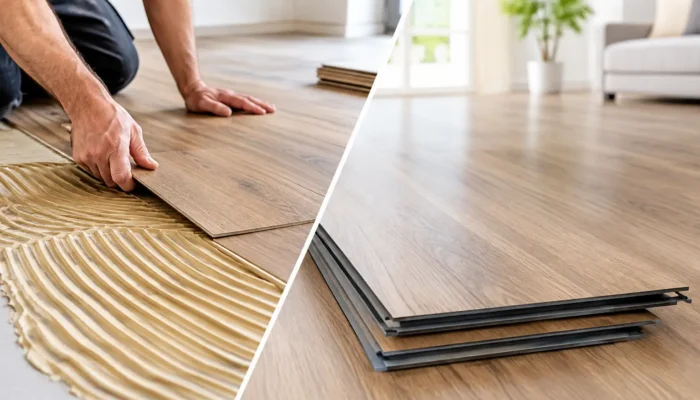
Most laminate is installed as a floating floor, meaning the planks lock together and rest over an underlayment rather than being glued down. This design needs room around walls, cabinets, and fixed objects for normal expansion and contraction. When that expansion gap is missing, the floor can tent or buckle as conditions change.
Subfloor preparation matters just as much. The surface needs to be clean, dry, and level within the manufacturer’s specifications. On concrete, moisture testing and the right vapor barrier are essential. On older wood subfloors, loose areas and major unevenness should be addressed before the first plank goes down.
Professional installation also protects the product warranty. Certified installers understand how to inspect the site, manage transitions between rooms, account for stair details, and avoid shortcuts that become expensive later. A written estimate should make clear what preparation, materials, and installation work are included.
Everyday Care That Keeps Laminate Looking Newer
Laminate is relatively easy to maintain, but it does not benefit from being soaked or aggressively scrubbed. Sweep, vacuum with a hard-floor setting, or use a dry microfiber mop regularly to remove grit. For routine cleaning, use a lightly damp microfiber mop and a laminate-safe cleaner according to the product instructions.
Avoid steam mops, soaking wet mops, waxes, oil soaps, and abrasive powders. These can force moisture into seams, leave a dull film, or damage the protective surface. Clean spills promptly, especially pet accidents and standing water near the kitchen sink or exterior doors.
A few small habits make a noticeable difference over time. Use felt pads under furniture, lift rather than drag heavy pieces, keep pet nails trimmed, and place protective mats in busy areas. Choose mats without rubber or latex backing unless the flooring manufacturer approves them, since certain backings can discolor some floor finishes.
Sunlight is another consideration. Quality laminate is designed to resist fading, but intense direct sun can still affect any flooring over many years. Blinds, curtains, or UV-filtering window treatments help protect both your floors and furnishings.
When Laminate Is the Right Value – and When It Is Not
Laminate is a strong choice when you want the warmth and style of wood visuals at a more manageable price, along with better scratch resistance than many hardwood options. It is especially appealing for busy households that want a durable, attractive floor without the cost and upkeep of solid hardwood.
Its trade-off is moisture. A water-resistant laminate can perform very well in many active homes, but it is not the best answer for every room or every lifestyle. Homes with repeated wet-floor situations may be better served by luxury vinyl in those areas, while laminate can still be a great fit for the rest of the home.
The best decision is easier when you can see samples next to your cabinets, wall color, lighting, and furniture. An in-home consultation also makes it possible to evaluate traffic patterns, pet needs, subfloor conditions, and budget before you commit. Choice Floors Northern Colorado helps homeowners compare practical options in the space where the floor will actually be used, not under warehouse lighting.
A durable laminate floor is not about buying the most expensive plank on the shelf. It is about choosing the right rating, the right moisture protection, and the right installation for your home – then giving it the simple care it needs to handle real family life.

Related Posts

Comments (0)