Use this flooring quote guide to compare materials, labor, prep, and warranties, then choose an estimate that fits your Northern Colorado home and budget.
Which Rooms Need Waterproof Flooring Most?
A dripping dishwasher hose, wet snow tracked in by the kids, and a bathtub that overflows once are all it takes to change how a floor looks and performs. So, which rooms need waterproof flooring? Start with the places where water is expected, spills are frequent, or moisture can sit unnoticed. For many Northern Colorado homes, that means more than just the bathroom.
Waterproof flooring is a practical upgrade for busy households because it gives you more time to wipe up life before a small mess becomes swelling, staining, mold concerns, or a costly replacement. The right choice still depends on the room, the subfloor, your family, and whether you need true waterproof protection or simply a more water-resistant surface.
Which Rooms Need Waterproof Flooring First?
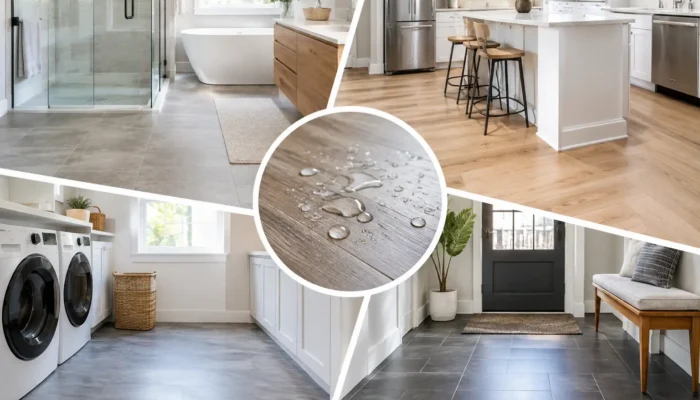
The highest-priority rooms are bathrooms, laundry rooms, kitchens, mudrooms, and below-grade basements. These spaces see the most direct water exposure, humidity, spills, and tracked-in moisture. If your remodeling budget requires you to work in stages, these are the rooms where waterproof flooring usually delivers the best return in peace of mind.
That does not mean every other room needs the same level of protection. A formal dining room may be a great place for hardwood, while a rarely used guest bedroom can comfortably use carpet or laminate. The goal is not to put one product throughout the entire house. It is to match the floor to the way each room is actually used.
Bathrooms: The clearest case for waterproof floors
Bathrooms are the obvious starting point. Daily showers create humidity, wet towels hit the floor, children splash at the tub, and small plumbing leaks can stay hidden behind a vanity. Traditional solid hardwood is generally a poor fit here because standing moisture can cause cupping, gaps, discoloration, and long-term damage.
Waterproof luxury vinyl plank or tile is often an excellent choice for bathrooms. It can provide the wood or stone look homeowners want while standing up to splashes and easy cleanup. Sheet vinyl and tile can also work well, depending on the style, budget, and condition of the subfloor.
One important distinction: waterproof flooring is not the same as a waterproof bathroom. Proper installation, sealed transitions, a sound subfloor, and attention around toilets and tubs all matter. Flooring can handle surface water, but it cannot solve an active plumbing problem below it.
Laundry rooms: Small room, big leak potential
Laundry rooms have a way of producing the kind of water event nobody plans for. A loose washing machine hose, clogged drain, or appliance leak can send water across the floor quickly. Because laundry rooms are often compact, homeowners sometimes overlook them during a remodel. That is exactly why waterproof flooring makes sense there.
Luxury vinyl is a popular option because it is comfortable underfoot, easy to clean, and available in styles that coordinate with nearby halls, kitchens, or living spaces. Tile is another durable choice, especially when a homeowner wants a more traditional laundry-room finish. If the laundry area is on an upper floor, make sure the installation plan addresses transitions and potential water containment thoughtfully.
Kitchens: Choose for spills, pets, and everyday traffic
A kitchen does not need to flood to test a floor. Ice maker leaks, dropped glasses, dog water bowls, wet mopping, cooking spills, and busy family traffic all add up. Kitchens are one of the best places to consider waterproof flooring because the room is used constantly and cleanup needs to be simple.
Waterproof luxury vinyl flooring is especially appealing in kitchens because it is warmer and softer underfoot than tile, which can make a real difference when you are cooking, packing lunches, or hosting family. It also gives homeowners a wide range of realistic wood and stone visuals without the maintenance concerns of natural hardwood near sinks and dishwashers.
Hardwood can still be used in a kitchen, particularly in homes where a continuous hardwood look is a design priority. Just go into that choice with clear expectations. Prompt spill cleanup, careful appliance maintenance, and occasional refinishing may be part of the ownership experience. For families with young kids, large dogs, or a packed schedule, waterproof vinyl is often the easier choice.
Mudrooms and entryways: Protect against Colorado weather
Northern Colorado entryways work hard. Rain, snow, slush, gravel, mud, and de-icing residue can come through the door during every season. Add boots, backpacks, pets, and sports gear, and an entry floor needs to be more than attractive.
Waterproof flooring in a mudroom or main entry helps prevent moisture from soaking into vulnerable seams or sitting against a wood-based core. It is also much easier to sweep and mop after a messy day. Textured luxury vinyl tile, waterproof vinyl plank, and tile are all smart candidates, depending on whether you want a warm wood look, a clean stone look, or maximum traction.
If your front door opens directly into the living room, waterproof flooring may be worth considering there as well. You do not have to sacrifice a comfortable, finished look to get a floor that handles real life.
Basements: Moisture calls for a careful plan
Basements deserve special attention because their moisture risk is different. Even a finished basement that has never flooded can have humidity, concrete-slab moisture, condensation, or occasional seepage. Carpet and hardwood are not automatically off limits, but they require the right conditions and preparation.
Waterproof luxury vinyl is often a strong basement choice because it does not absorb surface spills and works well with many basement design styles. Still, no flooring should be installed over an unresolved moisture problem. If the slab has active water intrusion or excessive moisture, address drainage, cracks, grading, or vapor mitigation first. Covering a problem can trap it where you cannot see it.
For a family room, playroom, or basement rec area, waterproof vinyl offers a practical balance of comfort, durability, and easy cleanup. Area rugs can add softness without making the entire room dependent on wall-to-wall carpet.
Rooms Where Waterproof Flooring Is Optional
Bedrooms, home offices, formal living rooms, and dining rooms usually do not require waterproof flooring. In these spaces, comfort, warmth, acoustics, and design may matter more than water protection. Carpet remains a cozy choice for bedrooms, while hardwood can bring character and long-term value to low-moisture areas.
That said, household habits matter. A bedroom used by toddlers, a home office shared with a large dog, or a living room connected to a pool patio may benefit from waterproof flooring more than the room label suggests. Think about the messes that happen there, not just the room’s name.
Waterproof vs. Water-Resistant: Know What You Are Buying
These terms are often used loosely, but the difference can affect your decision. Waterproof flooring is designed so that the flooring material itself will not be damaged by water exposure within the product’s stated limits. Water-resistant flooring slows moisture down, but it may still swell, stain, or fail if water reaches the core or seams.
Many homeowners are surprised to learn that standard laminate, while durable and attractive, is not always the right choice for wet spaces. Some newer laminate products offer improved water resistance, but they should be selected carefully for bathrooms, laundry rooms, and other areas with standing-water risk. Product construction, warranty details, and installation requirements all matter.
Luxury vinyl plank and luxury vinyl tile are common waterproof choices, but quality varies. A professional consultation can help you compare wear layers, textures, locking systems, backing, thickness, and the products that best fit your budget. The least expensive option is not always the best value if it does not hold up to the way your family lives.
Installation Matters as Much as the Floor
Even the right waterproof product can underperform with poor preparation or installation. Subfloors need to be clean, level, and dry enough for the selected material. Doorways, floor transitions, cabinets, appliances, and trim all need a plan. In bathrooms and laundry areas, installers also need to account for fixtures and edge details that affect both appearance and moisture protection.
This is where an in-home estimate is helpful. Rather than guessing under showroom lighting or trying to measure around appliances yourself, you can see samples in your home and get advice based on your actual rooms. Choice Floors Northern Colorado brings that process to you, making it easier to compare family-friendly options, understand the installation scope, and find name-brand flooring at savings of 30-60% compared with big box retail pricing.
A floor should fit the room, but it should also fit your routine. If you are tired of worrying about wet boots, pet bowls, laundry mishaps, and kitchen spills, start with the spaces that see the most moisture and traffic. The best waterproof floor is the one that lets your home stay beautiful without asking your family to live too carefully.

Related Posts