
Use this flooring quote guide to compare materials, labor, prep, and warranties, then choose an estimate that fits your Northern Colorado home and budget.
How to Pick Flooring Colors for Every Room
A flooring sample can look warm and inviting in your hand, then look completely different once it covers a room. That is why learning how to pick flooring colors is less about finding the trendiest shade and more about seeing the full picture: your home’s natural light, wall colors, furniture, family life, and long-term plans.
The right floor should make everyday life easier while helping each room feel intentional. Whether you are replacing worn carpet, updating a kitchen, or choosing materials for a whole-home remodel, color is one decision you will see every day. A little planning now can prevent a costly choice that feels too dark, too cold, or too busy after installation.
How to Pick Flooring Colors by Starting With Your Home
Start with what is staying. Flooring usually covers more square footage than any other finish in a room, but it should still work with permanent or expensive elements such as cabinets, countertops, fireplaces, interior doors, and trim. If you are not replacing those items, bring their undertones into the decision.
Look beyond the obvious color. A gray cabinet can have blue, green, or warm taupe undertones. A white wall may lean creamy rather than bright white. Hardwood-look flooring may read beige at first glance but include golden, gray, or reddish variation. When undertones clash, a room can feel off even when every individual item is attractive.
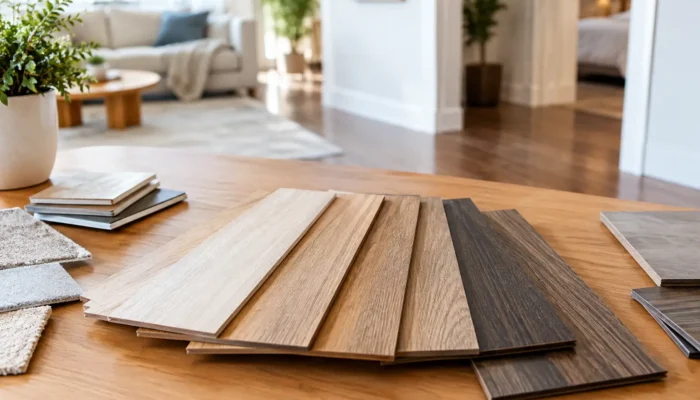
A helpful approach is to compare samples side by side in the actual room. Place them next to cabinetry and near the wall, then step back several feet. A sample that works near a countertop may look different when it is surrounded by wall color and daylight. Viewing options in your home is far more useful than trying to judge them under showroom lighting.
Let Natural Light Guide the Color
Northern Colorado homes see strong sunlight, often with bright, clear light that can change the appearance of flooring from morning to afternoon. The direction of a room matters.
North-facing spaces typically receive cooler, more indirect light. Warm neutral flooring, such as natural oak tones, honeyed beige, or soft greige, can keep these rooms from feeling stark. South-facing rooms receive more warmth and light, so they can handle a wider range of colors, including cooler grays or medium brown tones.
East-facing rooms tend to be brightest in the morning, while west-facing rooms become warmer later in the day. Before committing, leave several flooring samples on the floor for a full day. Check them in morning sun, afternoon light, and after the lights come on at night. Artificial lighting matters more than homeowners expect, especially in hallways, basements, and bedrooms.
Do not automatically choose a light floor for every small room. Light colors can make a space feel more open, but a medium-tone floor can add welcome depth and warmth when the walls and furnishings are light. The goal is balance, not simply making every surface pale.
Decide How Much Contrast You Want
Contrast gives a room definition. Low-contrast rooms use flooring, walls, and furnishings in similar tonal ranges, creating a calm, open feel. Higher contrast uses noticeable differences, such as dark flooring with white trim and light furniture, for a more dramatic look.
Neither choice is automatically better. Low contrast works especially well in open floor plans where you want spaces to flow together. It can also make a smaller room feel less chopped up. Higher contrast can make architectural details stand out and add personality to a room with simple finishes.
The trade-off is maintenance and visual weight. Very dark floors against light walls can be striking, but they may show dust, pet hair, and footprints more readily. Very light floors can hide some dust but may reveal dark debris, scuffs, or spills depending on the material and finish. Mid-tone floors are often the most forgiving choice for busy households because they balance warmth, contrast, and everyday appearance.
Match the Floor to Your Lifestyle, Not Just a Photo
A beautiful floor has to perform in real life. If you have kids dropping snacks, a dog racing in from the yard, or a packed schedule that leaves little time for constant cleaning, choose a color and pattern that are practical.
For many families, flooring with natural variation is a smart option. Wood grains, subtle tonal movement, and heathered carpet colors help disguise small messes and normal wear better than a perfectly uniform surface. Luxury vinyl planks with realistic variation can be especially useful in kitchens, entryways, and pet-friendly areas, while patterned or flecked carpet can be a comfortable, forgiving choice for bedrooms and living rooms.
Avoid selecting a color solely because it looks spotless in a staged photograph. A solid espresso floor may look rich and polished, but it can demand frequent cleaning in a sunny home with pets. A bright white carpet can feel fresh, but it may not be the best fit for a family room where everyone gathers. You deserve flooring that supports your life rather than adding another chore to it.
Keep Open Areas Connected
In homes with open kitchens, dining spaces, living rooms, and connected hallways, flooring color has a major effect on flow. Using one main flooring color across adjoining spaces usually makes the home feel larger and more cohesive. It also simplifies future updates because you are working from one consistent foundation.
That does not mean every room needs the exact same material. You can pair a warm, natural-toned luxury vinyl floor in the main areas with carpet in nearby bedrooms, as long as the colors share a similar undertone. For example, a neutral carpet with beige and soft gray flecks can work well with a light oak-look floor that also carries subtle greige notes.
Transitions deserve attention, too. When two flooring colors meet in a doorway, aim for a relationship that feels deliberate. They can be similar in tone for a quiet transition, or clearly different for a defined change. What often looks accidental is two floors that are almost the same color but have competing undertones.
Use Trends Carefully
Flooring is a long-term purchase, so it should not be chosen like a seasonal paint color. Trendy choices can be inspiring, but the safest path is to use trends as a filter rather than a rule. If you love the look of light natural oak, warm neutrals, or subtle texture, choose a version that also complements your home and your furniture.
Neutral does not have to mean boring. A neutral floor can have grain, texture, pattern, and depth. It simply gives you flexibility to change paint colors, rugs, pillows, and furniture without replacing a major surface. This is especially valuable if you expect to sell within a few years or are updating several rooms over time.
If you are drawn to a bolder floor color, use it where it fits your plan. A deep-toned hardwood in a formal dining room or a dark patterned carpet in a home office can add character. Just make sure it is a choice you will enjoy after the excitement of the remodel wears off.
Bring Samples Home Before You Decide
The easiest way to avoid color regret is to see large samples in the rooms where they will be installed. Hold them vertically against cabinets, lay them flat near windows, and compare them with the furniture you are keeping. If possible, put a rug, throw pillow, or fabric swatch next to each option to see the whole palette at once.
Pay attention to sheen as well as color. Glossy finishes reflect more light and can make scratches or footprints more noticeable. Matte and low-sheen finishes often look softer and are more forgiving for active households. The same color can feel dramatically different depending on its finish and texture.
This is where an in-home consultation saves time. Choice Floors Northern Colorado brings name-brand options to your home so you can evaluate colors where they actually need to work, alongside your lighting, finishes, and daily routine. You get practical guidance, on-site measuring, and a written estimate without spending a Saturday walking through a crowded showroom.
A Confident Choice Looks Good on Monday Morning
The best flooring color is not always the lightest, darkest, or most popular option. It is the one that works with your home’s fixed finishes, feels right in your natural light, and holds up to the people and pets who live there.
Give yourself permission to choose the sample that feels balanced instead of chasing a dramatic look that may be hard to maintain. When you can see the options in your own rooms and compare them honestly, the right color becomes much easier to recognize.

Related Posts