
Use this flooring quote guide to compare materials, labor, prep, and warranties, then choose an estimate that fits your Northern Colorado home and budget.
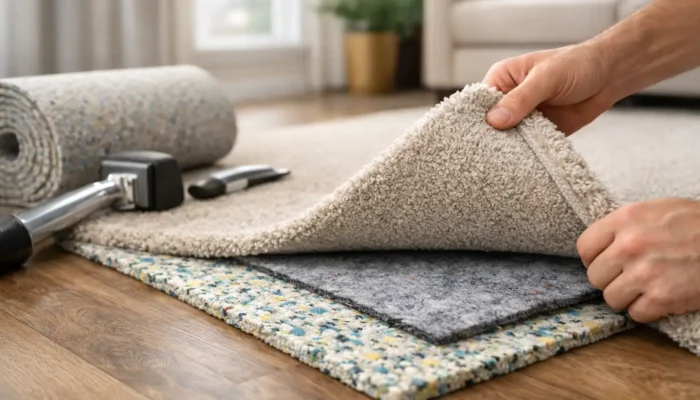
How to Choose Carpet Padding for Your Home
A carpet can look perfect in a sample and still feel disappointing underfoot if the padding beneath it is wrong. Too thin, and the floor may feel hard and wear faster. Too thick, and the carpet can flex, wrinkle, or lose support. Knowing how to choose carpet padding helps you get the comfort, performance, and value you expect from a new floor.
For Northern Colorado homeowners, padding is not an afterthought. It affects how carpet holds up to active kids, pets, guests, furniture, and everyday traffic. The right choice depends on the carpet you select, the room where it will be installed, and how your household actually lives.
Why Carpet Padding Matters More Than Most Homeowners Expect
Carpet padding, also called cushion, sits between the carpet and subfloor. Its job is not simply to make carpet feel softer. Quality padding helps absorb impact, supports the carpet backing, reduces noise, provides insulation, and can help carpet maintain its appearance longer.
Think of it as the foundation under your carpet. A high-quality carpet installed over poor padding may not perform like the premium product you paid for. At the same time, the most expensive padding is not automatically the best option. The goal is to match the pad to the carpet and room instead of buying based on thickness alone.
Padding also affects the way a room feels. Bedrooms often benefit from a softer, more cushioned step. Hallways, stairs, and family rooms need firmer support that can stand up to repeated traffic. A flooring professional can make those distinctions simple when they measure your home and show samples in the rooms where the carpet will live.
How to Choose Carpet Padding by Thickness and Density
The two measurements homeowners hear most often are thickness and density. They matter, but they do different jobs.
Thickness affects comfort and carpet stability
Most residential carpet padding falls between 3/8 inch and 1/2 inch thick. Many homeowners assume thicker padding always means a better floor, but that is not true. Padding that is too thick for the carpet can allow too much movement. Over time, that movement may contribute to stretching, wrinkling, and premature wear.
For many standard residential carpet installations, 7/16-inch padding is a dependable middle ground. It offers comfortable cushioning without making the carpet feel unstable. Low-profile carpet, patterned carpet, Berber styles, and some loop carpets may require thinner, firmer padding. Always follow the carpet manufacturer’s recommended pad specifications, especially when warranty coverage matters.
Density affects support and durability
Density is usually measured in pounds. Higher density means the padding is firmer and better able to resist compression. This is often the more important number for long-term performance.
A 6-pound pad is commonly used in bedrooms and lower-traffic rooms. An 8-pound pad is a popular choice for busy households because it offers stronger support while still feeling comfortable. For high-traffic areas, stairs, or homes with energetic children and larger pets, an 8-pound or higher-density pad can be a smart investment.
A simple rule works well: choose padding with enough density to support the activity in the room, then choose a thickness approved for the carpet style. Softness feels great on day one, but firm support is what helps your carpet look good years later.
Match the Padding to the Room, Not Just the Carpet
One home may need more than one type of carpet padding. That is not upselling when the rooms have genuinely different demands. It is practical product matching.
Bedrooms are usually lower-traffic spaces, so homeowners often prioritize comfort. A quality 6-pound or 8-pound rebond pad can work well, depending on the carpet style and your preference underfoot.
Family rooms, living rooms, and hallways see more foot traffic, furniture movement, and daily activity. These spaces benefit from denser padding that gives the carpet a stable base. If your family spends evenings on the floor, hosts often, or has kids running through the house, avoid choosing a pad just because it feels extra plush in your hand.
Stairs require special attention. Carpet on stairs takes concentrated wear and needs a firm, lower-profile pad that helps the carpet stay tight to each tread. Using overly thick padding on stairs can create an awkward feel and make installation more difficult.
Basements and concrete slab areas may call for moisture-resistant padding. In Northern Colorado, a finished basement can be a comfortable extension of the home, but concrete can transfer cool temperatures and may be vulnerable to moisture. The right cushion can add warmth while giving you added protection where it is needed.
Understand the Main Types of Carpet Padding
Several padding materials are available, and each has a place. Your best option depends on room conditions, carpet construction, and budget.
Rebond padding is the most common residential choice. Made from bonded pieces of foam, it offers good durability, reliable comfort, and strong value. It is available in different densities, making it versatile for bedrooms, family rooms, and many whole-home carpet projects.
Memory foam padding provides a softer, more luxurious feel. It can be appealing in bedrooms or comfort-focused spaces, but it still needs the proper density and thickness for the carpet. A plush feel should never come at the cost of support.
Rubber padding is dense, durable, and excellent for high-traffic areas. It is often a premium option and can be a strong fit for homeowners who want long-term performance in heavily used rooms.
Fiber padding, including felt-style options, can be firm and supportive. Some fiber pads are well suited to certain carpet types and may offer benefits for moisture management or sound control. The correct selection depends on the product specifications.
Moisture-barrier padding includes a protective layer designed to help prevent spills from soaking through to the subfloor. It can be useful for homes with pets, young children, or frequent entertaining. However, it is not a replacement for prompt cleanup. Liquids can still spread across the top of the barrier and may reach seams or edges if left unattended.
Consider Pets, Kids, and Everyday Life
If you share your home with pets or young children, carpet padding deserves a closer look. A moisture-barrier option may provide peace of mind for occasional spills and accidents. Dense padding can also help carpet recover better in active areas where paws, toys, and traffic are part of daily life.
That said, the barrier pad is only one part of the equation. Carpet fiber, stain protection, carpet construction, and professional installation all influence how well your floor handles a busy household. A dense, well-matched pad under a durable carpet is usually a better long-term choice than choosing either product in isolation.
For allergy concerns, ask about low-VOC padding options and products designed to support healthier indoor air quality. Proper installation and regular vacuuming matter as much as the pad itself, but product selection can help you create a home that feels more comfortable for your family.
Do Not Ignore Carpet Warranty Requirements
Many carpet warranties specify the acceptable thickness and minimum density of the padding. If the pad does not meet those requirements, you could lose valuable warranty coverage, even if the carpet itself is high quality.
Before installation, confirm the carpet manufacturer’s requirements for padding. This is especially important with premium carpets, looped styles, patterned carpet, and products with specific installation guidelines. A written estimate should make the carpet, padding, and installation details clear, so you know what is going into your home.
This is one reason an in-home consultation is so helpful. Instead of trying to compare labels in a large showroom, you can review carpet and padding together while considering the room, subfloor, traffic pattern, and your budget. Choice Floors Northern Colorado brings that guidance directly to your home, along with product samples, measurements, and a clear estimate.
Spend Smartly on Padding
Padding is one of the best places to protect the value of your carpet purchase. Skipping to the lowest-cost option may save a little upfront, but a weak pad can shorten the useful life of the carpet above it. On the other hand, paying for an unnecessarily thick or overly specialized pad does not guarantee a better result.
Ask for the recommended padding option first, then compare it with an upgraded choice based on a real benefit: higher density for heavy traffic, moisture protection for pets, or added comfort in a bedroom. That gives you a practical decision instead of a confusing menu of technical terms.
The best carpet padding is the one that supports your specific carpet, fits the demands of each room, meets warranty requirements, and stays within your renovation budget. When you can feel the samples underfoot in your own home, the right choice becomes much easier to make.

Related Posts