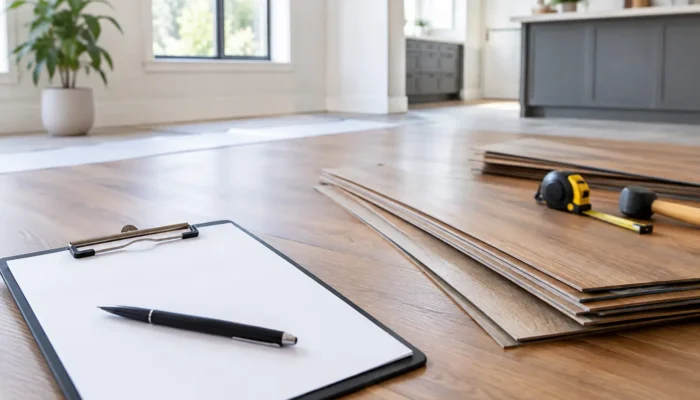
Use this flooring quote guide to compare materials, labor, prep, and warranties, then choose an estimate that fits your Northern Colorado home and budget.

Hardwood vs Laminate Cost: Which Pays Off?
A floor can look like a bargain on a small sample and become a budget surprise once material, underlayment, removal, trim work, and installation are added. That is why hardwood vs laminate cost is not just a price-per-square-foot question. The better value depends on how your family uses the room, how long you plan to stay, and whether you want a floor that can be refreshed years from now.
For Northern Colorado homeowners, both choices can make sense. Hardwood brings natural character and long-term appeal. Laminate delivers the look of wood at a lower upfront price, often with strong protection against daily scratches and active family life. The smart choice is the one that fits your home and your actual budget from day one.
Hardwood vs Laminate Cost at a Glance
Laminate is usually the more affordable option at the start. Material costs commonly range from about $1 to $5 per square foot, depending on the design, thickness, wear layer, and water resistance. Installation can add roughly $2 to $6 per square foot, though room layout, subfloor condition, stairs, and furniture moving all affect the final number.
Hardwood typically costs more because it is a real wood product and requires more specialized installation. Many homeowners can expect hardwood materials to run around $4 to $12 or more per square foot. Installation may add $4 to $10 per square foot, particularly for nail-down or glue-down applications. Wide planks, premium species, custom stains, and intricate layouts increase that investment.
Those ranges are useful starting points, but they are not a quote. A simple rectangular bedroom with a sound subfloor costs far less to complete than a main level with multiple transitions, uneven areas, old flooring removal, and stairs. Seeing samples and measuring the space in your home is the clearest way to compare the real hardwood vs laminate cost.
What You Are Actually Paying For
The material price tells only part of the story. Hardwood is a natural product, so plank grade, species, width, finish, and construction all influence its cost. Oak may offer a more approachable path than hickory or walnut. Engineered hardwood can also provide the authentic wood surface homeowners want while offering different price points and installation options than solid hardwood.
Laminate is built in layers, with a high-resolution wood visual protected by a tough wear layer. Better laminate products often cost more because they offer thicker cores, more realistic texture, improved locking systems, and stronger water resistance. A low-priced laminate can be a practical choice for a light-use room, but a busy kitchen, hallway, or living room usually deserves a product designed for higher traffic.
Installation details matter just as much. Laminate often floats over an underlayment, which can make installation faster and less expensive in the right conditions. Hardwood may need moisture testing, acclimation, fastening, adhesives, or more subfloor preparation. That labor is part of what creates a stable, beautiful finished floor.
Do not forget the finish work. Baseboards, shoe molding, transitions between rooms, floor leveling, disposal of old carpet or tile, and moving appliances can change the total. A written estimate should spell out what is included, so there are no confusing surprises when installation day arrives.
When Laminate Delivers the Better Value
Laminate can be an excellent value for homeowners who need a clean, stylish update without putting the largest share of their remodeling budget into flooring. It is especially attractive for guest rooms, bedrooms, rental properties, and homes where a quick, predictable upgrade matters.
Families with children and pets often appreciate laminate’s resistance to everyday scuffs. While no floor is completely damage-proof, quality laminate handles many of the small impacts of real life well. It is also easy to maintain: regular sweeping and a manufacturer-approved cleaner are usually enough to keep it looking sharp.
Laminate is not automatically the right choice for every area. Water-resistant options have improved dramatically, but standing water and major leaks can still damage the core of many laminate floors. If a room sees frequent wet shoes, spills, or pet accidents, ask about the product’s specific water warranty and cleaning requirements instead of assuming all laminate performs the same way.
The other trade-off is repairability. If a laminate plank is badly damaged, it generally needs to be replaced. That may be simple if extra material is available, but it is not the same as refinishing a natural wood surface.
When Hardwood Is Worth the Higher Price
Hardwood is often worth the investment when homeowners want a floor with lasting character, natural variation, and a strong connection to the overall value of the home. It can make a main living area, dining room, or primary bedroom feel more established and personal than a printed wood visual.
One of hardwood’s biggest financial advantages is its lifespan. A quality wood floor can last for decades with proper care, and many solid hardwood floors can be sanded and refinished multiple times. Scratches, a dated stain color, and normal wear do not always mean replacement. Refinishing can give the room a fresh look while preserving the floor underneath.
Hardwood can also be a compelling feature for resale, especially in homes where buyers expect it. That does not mean you should overspend solely for a future sale. Market preferences, home price range, and the condition of the rest of the property all matter. Still, hardwood has a reputation for enduring appeal that laminate usually cannot match.
It does require realistic expectations. Wood can scratch, dent, expand, and contract with changes in moisture. Entryways, kitchens, and homes with large dogs may need extra care, mats, prompt spill cleanup, and a finish selected for your lifestyle. Its natural aging is part of the appeal for some homeowners and a concern for others.
Compare Lifetime Cost, Not Just Today’s Total
A lower installation price can be the right financial move, particularly if you are remodeling several rooms, preparing to sell soon, or trying to keep funds available for other upgrades. In that situation, laminate may deliver the attractive result you need without stretching the project beyond its limits.
If you expect to stay in the home for many years, hardwood may look different on a lifetime-cost basis. The initial investment is higher, but the ability to refinish rather than replace can shift the equation over time. A homeowner who replaces laminate after significant wear may spend less upfront but more across several decades than someone who maintains a hardwood floor.
There is no universal winner. A well-chosen laminate floor is a better investment than hardwood that forces you to compromise on installation quality or other essential repairs. Likewise, hardwood can be the better value when it fits your long-term plans and you want the flexibility to renew it rather than start over.
Get an In-Home Price That Matches Your Project
The most useful comparison happens in the rooms where the floor will live. Lighting can change the way a wood tone reads. Existing cabinets, wall colors, pets, foot traffic, and subfloor conditions all affect which product makes sense and what it will cost to install correctly.
Choice Floors Northern Colorado brings name-brand flooring samples to your home, measures the space, and helps you compare options without the showroom runaround. You can see what works with your furniture and lighting, ask direct questions about durability, and receive a written estimate built around your project. Saving 30-60% compared with big-box pricing can make it easier to choose quality without giving up the features your family needs.
Before making a decision, choose two or three products you genuinely like, then compare their complete installed price, warranty, maintenance needs, and expected lifespan. The right floor should feel good underfoot, work for the way your household lives, and leave you confident that your money went where it matters most.

Related Posts