Use this flooring quote guide to compare materials, labor, prep, and warranties, then choose an estimate that fits your Northern Colorado home and budget.
A Guide to Flooring for Basements That Lasts
A basement floor has a tougher job than the floor upstairs. It sits over concrete, deals with cooler temperatures, and can be the first place moisture shows up after snowmelt, heavy rain, or a plumbing issue. This guide to flooring for basements is built around the questions that matter most: What can handle moisture? What feels comfortable underfoot? What makes sense for your family and budget?
The best answer is rarely the same for every home. A finished basement used as a kids’ playroom needs something different than a polished home gym, guest suite, or entertainment space. Start with the condition of the concrete and how you plan to use the room, then choose a material that gives you the look you want without creating a maintenance headache later.
Start With the Basement, Not the Color Sample
Before comparing plank colors or carpet textures, take an honest look at the space. Concrete slabs naturally hold and release moisture. That does not mean your basement is destined for a flooring failure, but it does mean moisture preparation should lead the conversation.
Look for visible warning signs such as damp spots, white powdery residue on concrete, musty odors, peeling paint near the lower walls, or a history of water intrusion. Also consider the practical details: Does the basement have a floor drain? Is it fully below grade? Has the home ever had a sump pump issue or a backed-up drain?
A professional measure is valuable here because flooring performance depends on more than the product itself. The slab may need cleaning, leveling, moisture testing, or a compatible moisture barrier before installation. Skipping those steps to save a little money can turn an otherwise smart flooring purchase into an expensive replacement.
Keep humidity in check
Even a basement with no obvious leak can feel damp during parts of the year. Maintain reasonable indoor humidity, make sure downspouts direct water away from the foundation, and address plumbing leaks promptly. Flooring is not a substitute for fixing a water problem. It is the finish layer that performs best once the space beneath it is properly managed.
Luxury Vinyl Flooring: The Go-To Basement Choice
Luxury vinyl plank and luxury vinyl tile are often the easiest recommendations for finished basements. They offer a convincing wood or stone look, feel warmer and quieter than bare concrete, and stand up well to everyday family life. For many Northern Colorado homeowners, luxury vinyl delivers the balance of appearance, durability, and price that makes a basement remodel feel worthwhile.
Because luxury vinyl is water-resistant or waterproof depending on the specific product and construction, it is a strong fit for rec rooms, playrooms, home offices, workout areas, and basement hallways. It also handles pets, muddy shoes, snack spills, and busy weekends without demanding constant attention. A simple sweep and occasional approved cleaner are usually enough for routine care.
That said, waterproof flooring does not mean the room is protected from every flood scenario. Water can still reach walls, trim, underlayment, or the subfloor conditions beneath a floating floor. If your basement has recurring water intrusion, solve that issue first. The right plank can resist the spill, but it cannot correct a foundation drainage problem.
Laminate Flooring: Great Look, Right Conditions
Modern laminate flooring can offer attractive wood visuals and excellent scratch resistance at a budget-friendly price. It is a practical option for a dry, climate-controlled basement where homeowners want the look of hardwood without the cost of traditional wood flooring.
The key is understanding the product’s moisture limits. Many current laminates offer meaningful water resistance, but not every laminate is designed for below-grade use or long exposure to standing water. The product selection, underlayment, edge treatment, and installation details all matter.
If your basement has stayed consistently dry and you want a hard surface that can handle active kids or pets, laminate may be a smart value. If there is any uncertainty about moisture, luxury vinyl is generally the more forgiving choice. An in-home consultation helps make that call based on your actual slab and not just a label in a showroom aisle.
Carpet: The Comfort Choice for Dry Basements
Carpet remains one of the best ways to make a basement feel finished, warm, and welcoming. It softens sound for movie rooms and gaming spaces, cushions play areas, and takes the chill out of a concrete-based room. For a basement bedroom or family room, carpet can create the comfort that hard-surface flooring simply cannot duplicate.
Carpet is best reserved for basements with a dependable moisture history. If the room has previously flooded or regularly feels damp, carpet and padding can hold moisture and odors. In a dry basement, however, the right carpet paired with quality padding can be a long-lasting, family-friendly investment.
For homes with pets and children, consider stain-resistant carpet styles and ask about padding options that fit the room’s use. A den where everyone stretches out for family movie night may benefit from a softer, thicker feel. A basement staircase or high-traffic playroom may call for a more durable texture that hides footprints and wear.
Consider a combination of flooring types
You do not have to use one material throughout the entire basement. Luxury vinyl can make sense in a bar area, bathroom-adjacent space, or entry from the garage, while carpet adds comfort in a media room or bedroom. Thoughtful transitions let each area perform for its purpose while keeping the overall design cohesive.
What About Hardwood in a Basement?
Traditional solid hardwood is usually not the first choice below grade. Wood responds to changes in humidity, and concrete slabs create a more challenging environment than a main-level wood subfloor. That movement can lead to gaps, cupping, or other concerns over time.
Some engineered wood products may be appropriate in certain basement conditions, but this is a decision that deserves careful product-specific guidance. The slab preparation, moisture readings, installation method, and manufacturer requirements must all line up. If you love the warmth of a wood look but want fewer moisture concerns, luxury vinyl or select laminate styles can provide a similar visual with a more basement-ready profile.
Installation Is Part of the Flooring Decision
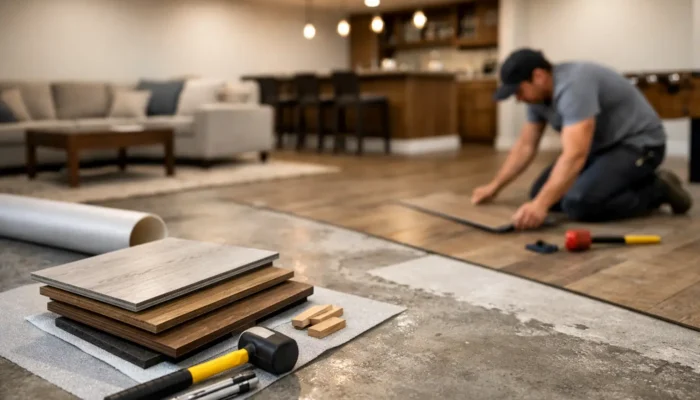
A beautiful floor can only perform as well as the preparation underneath it. Basement concrete is often uneven, cracked, or marked by old adhesive and paint. Depending on the project, professional installers may need to level low areas, repair surface imperfections, remove existing flooring, or use an underlayment system suited to the selected material.
This is where an accurate in-home estimate makes a real difference. Instead of choosing a floor based on a small showroom sample and hoping it works, you can see samples in your basement’s lighting, compare them against your walls and furniture, and get recommendations based on the actual conditions of the space.
At Choice Floors Northern Colorado, the goal is to make that process easier. Our mobile shopping model brings name-brand flooring samples to your home, along with professional measuring and clear guidance on options that fit your lifestyle. You can save 30-60% compared with big box retail pricing while getting help that is specific to your project, not a generic aisle recommendation.
How to Choose the Right Basement Floor
Think about the room five years from now, not just how it will look on installation day. If you expect teens, dogs, guests, exercise equipment, or frequent entertaining, choose for durability and easy cleanup. If the basement will be a quiet retreat or guest bedroom, comfort may deserve more of the budget.
Also factor in the transition from the stairs and adjoining rooms. A floor that looks great by itself can feel out of place if its tone clashes with the main level. Viewing samples at home helps you see how natural light, paint colors, and existing finishes affect the final look.
The right basement floor should make the space easier to enjoy, not give you one more thing to worry about. Start with honest moisture preparation, choose a material that matches the way your family actually lives, and let an experienced flooring professional help you get the details right before installation day.

Related Posts