Use this flooring quote guide to compare materials, labor, prep, and warranties, then choose an estimate that fits your Northern Colorado home and budget.
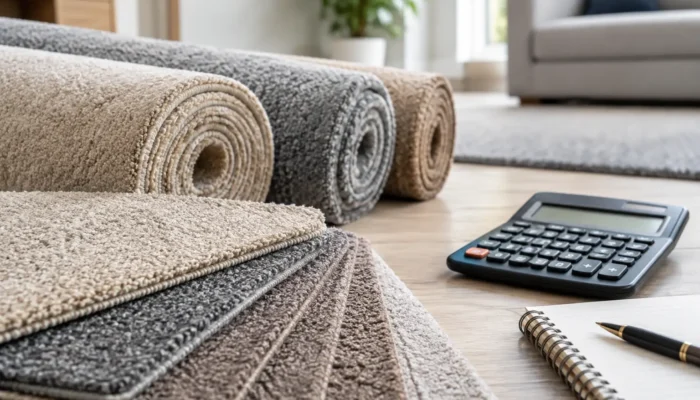
Carpet Prices and What You’ll Really Pay
A low carpet price can look like a great deal until the estimate adds padding, removal, installation, and the details needed to finish the room correctly. The better question is not simply, “What does carpet cost?” It is, “What will it cost to get the right carpet professionally installed in my home?” Understanding carpet prices upfront helps you compare estimates fairly, protect your budget, and choose a floor your family will enjoy living on.
For homeowners replacing worn carpet, updating bedrooms, or preparing for a larger remodel, the right choice comes down to more than the price per square foot. Pets, kids, stairs, sunlight, room traffic, and how long you plan to stay in the home all affect what represents real value.
What Carpet Prices Actually Include
Carpet is commonly priced by the square foot or square yard, but the material itself is only one part of the finished project. A complete quote should make it clear what is included, what is optional, and what could change after the home is measured.
Most installed carpet projects include the carpet, padding, labor, and basic installation materials. Depending on the space, there may also be charges for removing old carpet, hauling it away, moving furniture, repairing or preparing the subfloor, replacing tack strip, installing transitions, or wrapping stairs. These are not surprise add-ons when they are discussed early. They are real parts of getting a clean, long-lasting result.
As a general planning range, homeowners may see basic carpet projects start around $3.50 to $5.50 per square foot installed. Mid-grade choices often land around $5.50 to $9 per square foot installed, while premium carpets, upgraded padding, patterned styles, and stair work can move the total above $10 per square foot. Your exact price depends on the product, the layout of your home, and the preparation required.
That range is why an in-home measurement matters. A room that appears to be a simple rectangle may have closets, angled walls, doorways, or seams that affect material needs. Measuring on-site gives you a quote based on your actual rooms, not a rough guess that changes later.
Material Cost Depends on Fiber and Construction
The carpet fiber has a major influence on both price and performance. Polyester is often an appealing option for homeowners who want a soft feel and strong color at a lower price point. Many modern polyester carpets also offer good stain resistance, making them a practical pick for bedrooms and lower-traffic spaces.
Nylon usually costs more, but it remains a strong choice for busy households. It is known for resilience, which means it can better recover after furniture, foot traffic, and everyday family use. If your hallway, stairs, or living room gets constant activity, spending more on a durable nylon can be smarter than replacing a lower-cost carpet sooner.
Triexta offers a balance of softness, durability, and stain resistance. It is often worth considering for homes with children or pets, especially when comfort matters as much as performance. Wool sits at the premium end of the market, valued for its natural feel and appearance, but it requires a larger budget and more specialized care.
Construction matters too. A denser carpet generally feels more substantial and can wear better than a loose, lightweight style. Texture, twist level, pile height, pattern, and backing all influence the price. A plush carpet may feel amazing underfoot, but a lower-profile textured option can hide footprints and vacuum marks better in a busy family room.
Why Padding Is Part of the Carpet Price
Padding is easy to overlook because nobody sees it after installation. Still, it affects comfort, insulation, sound reduction, and how well the carpet wears over time. Choosing the least expensive pad simply to lower the quote can be a false savings if it allows the carpet to break down faster.
The right pad depends on the carpet and the room. Bedrooms may benefit from a comfortable cushion, while stairs and high-traffic areas usually need firmer support. In homes with pets or occasional spills, a moisture-resistant pad can help prevent odors and make cleanup easier.
A good flooring professional should explain the padding options in plain language. You do not necessarily need the most expensive pad available. You need the one that supports the carpet you choose and fits how your household uses the room.
How to Compare Carpet Prices Without Missing Costs
When two carpet estimates are far apart, do not assume the lower number is automatically the better value. Ask whether each quote covers the same scope of work. One estimate may include upgraded padding, furniture moving, removal of old flooring, disposal, transitions, and professional installation, while another may leave several of those items out.
Look at the carpet brand and style, fiber type, warranty, face weight, padding specifications, and installation details. If you are comparing samples, compare products with similar performance, not just similar color. A lower price can be appropriate when the carpet is designed for a guest room. It may not be appropriate for a main living area where two dogs and three kids spend every afternoon.
It also helps to ask how the installer will handle seams, stairs, closets, and transitions to hard-surface flooring. Professional installation protects the look of your carpet and the validity of manufacturer warranties. Poor stretching or rushed seam work can shorten the life of even an excellent product.
At Choice Floors Northern Colorado, the in-home shopping process allows homeowners to see samples beside their wall colors, furniture, and natural lighting before making a decision. It also makes it easier to get a written estimate that reflects the true size and needs of the project.
The Hidden Factor: Carpet Waste and Room Layout
Carpet typically comes in standard roll widths, often 12 feet wide. That means your room dimensions affect how efficiently the material can be cut. A 10-by-12-foot room may use material efficiently, while an oddly shaped room, wide hallway, or combination of connected spaces can require additional carpet to create proper seams and direction matching.
This is called waste, though it is not always avoidable. It is simply the material needed to install the carpet correctly. Patterned carpet can require more because the installer must align the design at each seam. Stairs also require more labor and careful cutting than an open bedroom.
A trustworthy estimate should account for these realities before installation day. The goal is not to sell you extra material. The goal is to avoid an inaccurate price and ensure the finished carpet looks intentional from every angle.
Where It Makes Sense to Spend More
Not every room needs the same carpet. This is one of the easiest ways to keep a project affordable without cutting corners. You may choose a more durable, stain-resistant carpet for the family room and hallway, then select a comfortable value option for guest bedrooms that receive less traffic.
It can also be worthwhile to upgrade padding in the rooms where your family spends the most time. In a basement, consider moisture conditions before choosing a carpet and pad. On stairs, prioritize durability and installation quality over a deep, delicate pile that may show wear quickly.
Color is another practical decision. Light neutrals can make a room feel open, but they may require more frequent care in a pet-friendly home. Flecked, textured, or medium-tone styles tend to hide everyday life better while still looking polished.
Get a Price That Matches Your Home, Not a Guess
The fastest way to make sense of carpet pricing is to start with the rooms you want to change, your target budget, and the way your household lives. A free in-home estimate gives you the chance to compare carpet styles where they will actually be installed, get precise measurements, and see the full cost before work begins.
You deserve a carpet choice that feels comfortable underfoot, stands up to real life, and does not leave you sorting through vague fees after the fact. A clear quote and the right guidance can turn a flooring project from another remodeling headache into a decision you feel good about every time you walk through the room.

Related Posts