
Use this flooring quote guide to compare materials, labor, prep, and warranties, then choose an estimate that fits your Northern Colorado home and budget.
A Whole Home Flooring Renovation Example
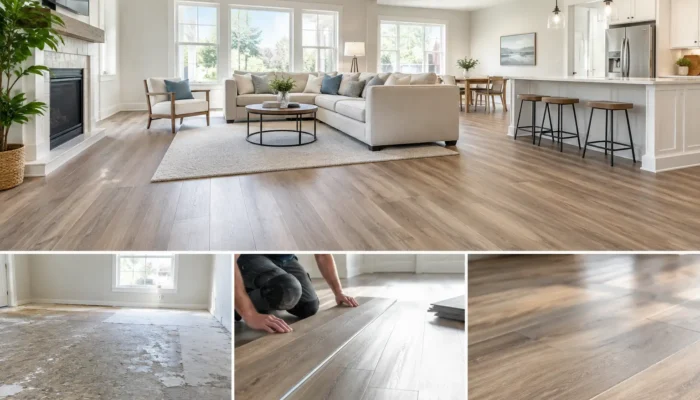
A whole home flooring renovation example is most helpful when it looks like a real home, not a perfect showroom. Picture a busy Northern Colorado family replacing worn carpet, dated laminate, and mismatched tile with floors that can handle kids, pets, muddy shoes, and everyday life – while keeping the project on a practical budget.
The goal is not to put the same flooring in every room just because it seems easier. The right whole-home plan creates a consistent look while matching each material to the way that room is actually used. It also avoids the common renovation mistake of choosing floors room by room, then discovering the colors, heights, and transitions do not work together.
The Starting Point: A Home With Too Many Floors
Consider a typical 2,000-square-foot home with flooring that has been updated in pieces over the years. The entry has cracked tile. The living room has carpet that shows every pet hair and traffic path. The kitchen has laminate with swollen edges near the dishwasher. Upstairs, the bedrooms have aging carpet, while the hallway is finished with a different color of laminate.
Nothing may be completely unusable, but the home feels disconnected. Cleaning takes longer because every surface needs a different approach. The owners also want to sell in a few years, so they need an update that feels current without overspending on materials that do not fit their lifestyle.
For this project, the priorities are straightforward: a cleaner visual flow, comfortable bedrooms, water-resistant main living areas, dependable installation, and a price that makes sense for a full renovation.
A Whole Home Flooring Renovation Example by Room
The main-floor selection starts with luxury vinyl plank. It runs from the entry through the living room, dining area, kitchen, and hallway. A medium natural-oak tone gives the home warmth without showing every crumb, scuff, or bit of Colorado dust. The plank format also helps the rooms feel more connected, especially in an open floor plan.
Luxury vinyl is a strong fit here because the family has a dog, a child, and a kitchen that gets real use. It is easier to live with than hardwood in a high-spill area, and it offers a more polished appearance than many older laminate floors. It is not the best answer for every homeowner, though. Someone who wants the long-term refinishing potential and natural variation of genuine wood may still prefer hardwood in selected spaces.
The bedrooms receive new carpet with upgraded padding. This keeps those rooms soft, warm, and quiet, which matters on chilly mornings and for families with young children. Rather than using a light beige that can show stains quickly, the homeowners choose a warm gray-taupe with subtle flecks. It works with the oak-inspired vinyl downstairs and gives the upstairs a calmer, more finished feel.
In the bathrooms and laundry room, the owners continue the luxury vinyl plank where the product is rated for those spaces. This reduces visual breaks and eliminates unnecessary thresholds. In some homes, porcelain tile may still be the better bathroom choice, particularly for homeowners who want a specific tile design or have an uneven subfloor that needs more extensive preparation. The best decision depends on the product, the room condition, and the look the homeowner wants.
The finished result is not a house covered in one material. It is a home with one coordinated foundation: durable hard-surface flooring where life is busiest and comfortable carpet where rest matters most.
Why the Color Plan Works
Whole-home flooring should connect rooms without making every room feel identical. In this example, the vinyl has a low-variation oak visual with balanced undertones. It is neither too orange nor too gray, which gives the homeowners flexibility with wall paint, furniture, and future updates.
The carpet is chosen after the vinyl, not before it. That sequence matters. Hard surface flooring often covers the largest, most visible areas of the home, so it should set the overall direction. Once that foundation is selected, carpet can complement the undertone rather than compete with it.
Samples should always be viewed in the home, near cabinets, paint colors, windows, and existing furniture. A floor that looks warm under showroom lights can look much cooler in a north-facing living room. That is one reason an in-home consultation makes decisions faster and more reliable than trying to remember a small sample after a trip to a big-box store.
The Installation Sequence That Keeps the Project Moving
A full flooring update can feel disruptive, but good planning prevents it from taking over your life longer than necessary. Before materials are ordered, the installer should measure each room, inspect subfloor conditions, identify transition needs, and confirm whether doors, baseboards, appliances, or toilets require special attention.
For this home, the furniture is moved out in stages. The old flooring is removed, followed by subfloor preparation where needed. This step is easy to overlook, but it directly affects how a new floor performs. A beautiful plank floor can still feel uneven or develop problems if the subfloor is not properly evaluated and prepared.
The hard-surface rooms are installed first, followed by carpet in the bedrooms. Baseboards and transitions are completed once flooring is in place. The family plans meals around the kitchen work and keeps pets away from active installation areas. A professional team will explain the schedule ahead of time so there are fewer surprises on installation day.
Where the Budget Goes – and Where It Should Not
Material cost is only one part of a whole-home renovation. Removal and disposal of existing floors, subfloor prep, furniture moving, transitions, trim work, stair details, and upgraded carpet padding can all affect the written estimate.
That does not mean you should cut every upgrade. In this example, the homeowners spend a little more on quality padding because it improves how the bedroom carpet feels and wears over time. They also choose a durable luxury vinyl product for the main floor because replacing a bargain floor after a few years is rarely a savings.
At the same time, they avoid paying for features they do not need. They do not install premium hardwood in the kitchen simply for the label. They do not choose an ultra-light carpet color that will create extra stress with a dog and child. Smart flooring decisions are about value, not just the lowest initial number.
Choice Floors Northern Colorado helps homeowners compare name-brand options in their own space, with a clear estimate that accounts for the details before installation begins. That approach can help families save 30-60% compared with big-box retail pricing while still getting materials and certified installation that fit the project.
The Details That Make the Finished Home Feel Intentional
A whole-home renovation becomes memorable in the small choices. Matching transitions should be planned rather than added as an afterthought. Stair carpet should coordinate with the upstairs rooms while fitting securely. Flooring direction should be considered across connected spaces so the layout feels deliberate.
Door clearance is another practical detail. New flooring can change finished floor height, especially when replacing thin materials with thicker products or adding new underlayment. Addressing this during the measuring stage is far easier than discovering it after the work has started.
The homeowners in this example also keep a few extra planks and a small remnant of carpet. That is useful for future repairs, closet changes, or damage from an unexpected accident. It is a simple step that can protect the investment years later.
A successful flooring renovation should make daily life easier the moment you walk in the door. Start with the rooms that work hardest, choose materials that fit the people and pets in your home, and let real samples guide the final decision. The best floor is the one you will still be happy to live on long after the installation crew has packed up.

Related Posts