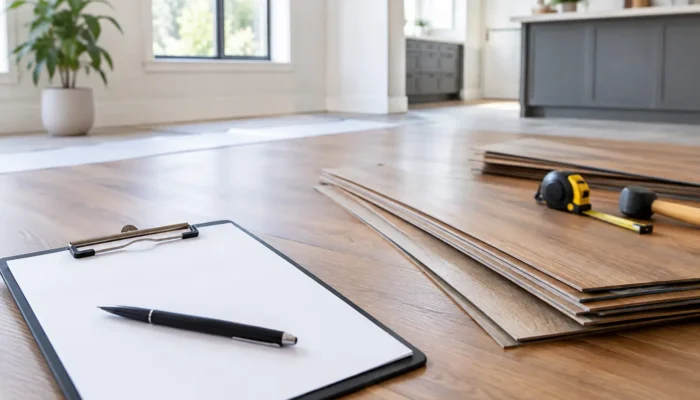
Use this flooring quote guide to compare materials, labor, prep, and warranties, then choose an estimate that fits your Northern Colorado home and budget.
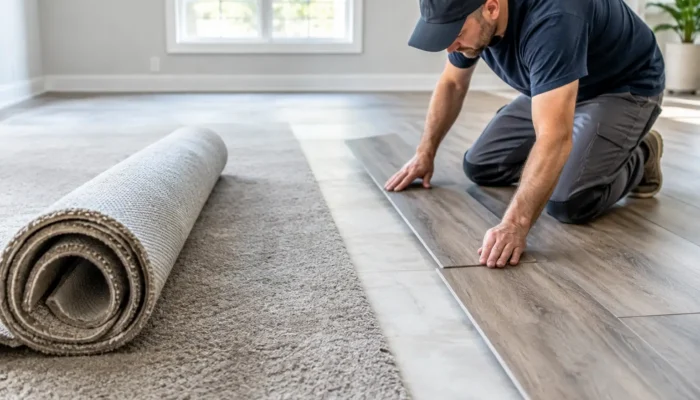
How to Replace Old Carpet With Vinyl Flooring
That tired carpet has usually been sending signals for a while: flattened traffic paths, stubborn pet odors, stains that return after cleaning, or fibers that make the room feel dated no matter how you decorate it. When you replace old carpet with vinyl, you can give the space a cleaner look and a tougher surface without taking on the cost or upkeep of traditional hardwood.
For busy households, luxury vinyl flooring is often a practical upgrade. It stands up well to kids, pets, muddy shoes, spills, and everyday life, while offering convincing wood and stone visuals underfoot. The key is choosing the right vinyl product and preparing what is underneath it correctly.
Why Homeowners Replace Old Carpet With Vinyl
Carpet can still make sense in bedrooms where warmth and softness matter most. But in living rooms, hallways, basements, dining rooms, and high-traffic family spaces, it can be hard to keep carpet looking fresh. Vinyl gives homeowners a surface that is easier to clean, more resistant to moisture, and less likely to hold onto the evidence of a busy household.
Luxury vinyl plank, often called LVP, is especially popular for homeowners who want the appearance of hardwood without worrying about water bowls, tracked-in snow, or a dropped drink. Luxury vinyl tile, or LVT, can create a stone or tile look with a warmer, more forgiving feel than ceramic.
The visual change can be just as meaningful as the practical one. Removing wall-to-wall carpet can make a room feel larger, brighter, and more current. Because vinyl comes in a wide range of colors, plank widths, textures, and patterns, it is easier to match the flooring to the home rather than trying to build the room around a limited carpet color.
Start With What Is Under the Carpet
The biggest question is not whether the carpet can come out. It is what the subfloor looks like once it is gone. Carpet and padding can hide uneven areas, old adhesive, squeaks, stains, cracks, and moisture issues that need attention before vinyl installation begins.
A vinyl floor needs a clean, dry, stable, and reasonably flat base. Even a quality luxury vinyl product can show imperfections over time if it is installed over a subfloor with dips, ridges, loose sections, or water damage. Click-lock planks may separate or flex when the surface is not properly prepared. Glue-down vinyl can telegraph imperfections through the finished floor.
In many homes, the subfloor only needs minor prep such as removing staples, securing loose panels, patching low areas, or smoothing transitions between rooms. Other projects need more involved work, particularly if there is old sheet vinyl, damaged plywood, or a concrete slab with moisture concerns.
This is where an in-home measure matters. A flooring professional can assess the actual conditions instead of guessing from a sample in a store aisle. That helps avoid surprises in the estimate and gives you a clear plan before the old carpet is removed.
Choose the Right Type of Vinyl for Your Home
Not all vinyl flooring is built for the same job. The best option depends on the room, household activity, budget, and the condition of the subfloor.
Luxury vinyl plank is a strong choice when you want a wood-look floor in open living spaces, hallways, kitchens, or bedrooms. It comes in many styles, from clean modern oak looks to warmer rustic textures. Wider planks can make an open room feel more expansive, while narrower options may fit a more traditional home.
Luxury vinyl tile works well when a tile or stone visual suits the space. It is often considered for kitchens, bathrooms, laundry rooms, and entryways. Some homeowners also use it to create a distinct look in a basement or mudroom without the cold feel of ceramic tile.
Sheet vinyl remains a budget-friendly option for certain rooms, especially where a nearly continuous moisture-resistant surface is useful. However, it does not provide the same individual-plank visual or replacement flexibility as LVP and LVT.
When comparing products, pay attention to the wear layer, not just the color. A thicker wear layer generally offers better resistance to scratches and daily traffic. For homes with large dogs, active children, or busy entryways, investing in a stronger product can pay off over time.
Think About Moisture Before You Choose
Vinyl is known for water resistance, but that does not mean every installation situation is identical. A spill on a properly installed vinyl floor is one thing. Ongoing moisture coming through a concrete slab or below-grade basement wall is another.
If you are replacing carpet in a basement, laundry room, or entryway, the source of any existing moisture should be addressed first. Vinyl can be an excellent finished floor for these areas, but it should not be expected to solve a drainage, plumbing, or foundation issue.
Product construction matters, too. Many vinyl floors handle ordinary household spills very well, but the seams, perimeter edges, and installation method still affect how water performs in the room. A professional can help you select a product that fits the conditions rather than relying on broad waterproof claims alone.
Plan for the Details Around the Room
Carpet hides a lot at the edges of a room. Once it is removed, you may need to account for baseboards, door jambs, transitions, stair edges, floor vents, and the height difference where vinyl meets another surface.
In some projects, baseboards are carefully removed and reinstalled after the vinyl goes down. In others, quarter round may be used to finish the perimeter. Neither approach is automatically better. The right choice depends on the condition of the trim, the look you want, and the project budget.
Door clearance is another common consideration. Vinyl may require doors to be trimmed or adjusted, particularly when an underlayment or subfloor repair is part of the project. If your new flooring will meet tile, hardwood, or laminate in another room, a properly selected transition piece keeps the change in height safe and finished-looking.
Do not forget furniture and appliances. Decide ahead of time whether rooms need to be cleared, whether heavy pieces require special handling, and whether appliances must be disconnected. A clear installation plan protects both your schedule and your home.
Can You Install Vinyl Over Existing Flooring?
Sometimes, yes. Vinyl can occasionally be installed over certain existing hard surfaces if they are clean, sound, flat, and firmly attached. This can reduce demolition time and help avoid disturbing older materials.
Carpet itself, though, must be removed. Carpet and padding are too soft and unstable to support vinyl flooring. The tack strips around the perimeter also need to come out, and the floor must be cleaned of staples and debris.
Installing over old tile, sheet vinyl, or another hard surface can be possible, but it depends on the floor’s condition and height. Deep grout lines, cracked tile, loose flooring, or excessive buildup can create problems. This is a decision worth making after a professional evaluation, not as a shortcut made from across the room.
Why Professional Installation Protects the Investment
Vinyl may look straightforward, but the finished result depends heavily on layout, subfloor prep, expansion spacing, seam placement, and detail work. A floor can have a beautiful color and still look disappointing if the planks run awkwardly, transitions are poorly finished, or the base is uneven.
Certified installation also saves homeowners from the messy, time-consuming parts of a carpet replacement project. Old carpet, padding, tack strips, staples, and damaged materials all need to be removed carefully. Then the new vinyl must be measured, cut, fitted, and finished around walls and obstacles.
For homeowners in Fort Collins, Loveland, Greeley, Windsor, and nearby Northern Colorado communities, Choice Floors Northern Colorado brings flooring samples directly to your home. Seeing the color in your own lighting, next to your cabinets, paint, furniture, and existing finishes makes the decision far easier than trying to picture it from a showroom display. You can also get an on-site measure, clear written estimate, and expert guidance designed around your family, pets, style, and budget.
A new vinyl floor should feel like relief, not another remodeling headache. Choose a product built for your household, make sure the surface beneath it is ready, and let the finished floor give your home the fresh start that old carpet never could.

Related Posts