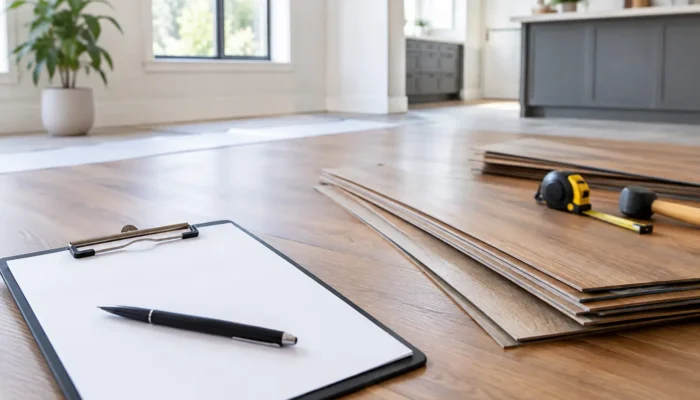
Use this flooring quote guide to compare materials, labor, prep, and warranties, then choose an estimate that fits your Northern Colorado home and budget.
Best Flooring for Uneven Subfloors at Home
A new floor can look perfect in the sample, then disappoint the moment it goes over a wavy, dipped, or creaky surface. That is why choosing flooring for uneven subfloors starts with the floor beneath the floor. The right material can handle minor imperfections, but no quality product can perform as it should over a subfloor with major low spots, movement, moisture damage, or structural issues.
For homeowners replacing worn carpet, updating a kitchen, or remodeling a whole house, this is good news: an uneven subfloor is usually a solvable problem. The key is matching the preparation work and flooring material to the actual condition of your home, not simply choosing the product that seems easiest to install.
Level Is Not Always the Same as Flat
Homeowners often say their floors are “unlevel,” but installers look at two separate conditions: level and flat. A floor can slope slightly from one side of the room to the other and still be flat enough for many flooring products. What causes trouble is a surface that rises and falls over short distances.
Picture placing a straight board across the floor. If it rocks over a hump or leaves a noticeable gap over a dip, the subfloor may need attention. Flooring manufacturers set their own flatness requirements, commonly measured over a six- or 10-foot span. Those requirements matter because they protect the flooring warranty and help prevent visible seams, bouncing, cracked locking systems, and premature wear.
Minor unevenness is common, especially in older homes. A pronounced dip near an exterior wall, a high spot where rooms meet, soft areas around old plumbing leaks, or a floor that flexes when someone walks across it needs a closer look before new flooring goes down.
What Happens When Flooring Goes Over an Uneven Subfloor?
Skipping prep can feel like a way to save time and money. It usually costs more later. Floating floors such as luxury vinyl plank and laminate need consistent support underneath. When they bridge a low spot, the planks can flex with every step. Over time, that movement can separate joints, damage click-lock edges, or create a hollow sound.
Hardwood can show gaps, squeaks, or uneven board edges when the surface below is not adequately prepared. Carpet is more forgiving visually, but it will not fix a soft, loose, or damaged subfloor. Thick carpet padding can make a minor flaw less noticeable underfoot, yet it cannot stabilize the structure below it.
The goal is not to make every house perfectly level from end to end. The goal is to create a clean, dry, stable, and sufficiently flat surface for the flooring you choose.
The Best Flooring for Uneven Subfloors Depends on the Problem
There is no single winner for every room. Material choice should follow the severity of the unevenness, the subfloor type, and how your family uses the space.
Carpet is the most forgiving for minor variations
Carpet with quality padding is often the most comfortable option for a subfloor with small imperfections. It can soften the feel of shallow dips and minimize the appearance of slight surface irregularities. That makes it a practical choice for bedrooms, family rooms, and finished basements where warmth and comfort matter most.
Carpet is not the answer for loose floorboards, water damage, or a major slope. Those conditions still need repair first. But when the subfloor is solid and only slightly uneven, carpet may require less corrective work than a rigid flooring product.
Luxury vinyl plank works well after targeted prep
Luxury vinyl plank is a favorite for busy homes with pets, kids, and everyday spills because it is durable, attractive, and easy to maintain. It can also be a strong option over a concrete slab or plywood subfloor once high spots and low areas are corrected.
The trade-off is that luxury vinyl plank is not as forgiving as it looks. Its rigid core may span small imperfections, but significant dips can cause flexing at the seams. Thinner vinyl products can telegraph texture from the subfloor, allowing bumps or ridges to show through the finished surface. Proper patching and smoothing make a major difference in how the floor feels and lasts.
Laminate needs a flat, stable base
Modern laminate offers convincing wood looks at a budget-friendly price, and it performs well in many living areas. Like vinyl plank, though, it is typically a floating floor with interlocking edges. It needs even support across the entire installation.
A minor surface issue can often be corrected with patching compound or localized sanding. A floor with widespread humps, dips, or movement may need more extensive leveling first. Choosing laminate without addressing those conditions can lead to noisy floors and stressed joints.
Hardwood is beautiful, but preparation matters most
Hardwood brings lasting value and character to a home, but it is not a shortcut around subfloor problems. Whether the floor is nailed down, glued down, or installed as engineered hardwood, the substrate must meet the manufacturer’s specifications for flatness, moisture, and stability.
Engineered hardwood can be a smart choice where humidity changes or concrete conditions are part of the equation, but it still needs thoughtful preparation. If a subfloor is uneven because of structural movement, moisture, or deteriorated plywood, repair comes before installation.
Why Underlayment Is Not a Fix for Major Unevenness
One of the most common misunderstandings is that a thicker underlayment will level the floor. Underlayment has an important role. It can provide cushioning, sound reduction, or a moisture barrier depending on the product and application. It is not designed to fill deep depressions or correct high spots.
Using too much padding beneath a floating floor can actually create more movement. That movement puts pressure on locking systems and can shorten the life of the flooring. The correct underlayment is part of a successful installation, but it must be paired with the right subfloor preparation.
How Professionals Correct Uneven Subfloors
The repair method depends on whether the subfloor is wood or concrete and what is causing the issue. A qualified installer begins by measuring the surface, checking for moisture, identifying squeaks or soft spots, and determining whether the concern is cosmetic or structural.
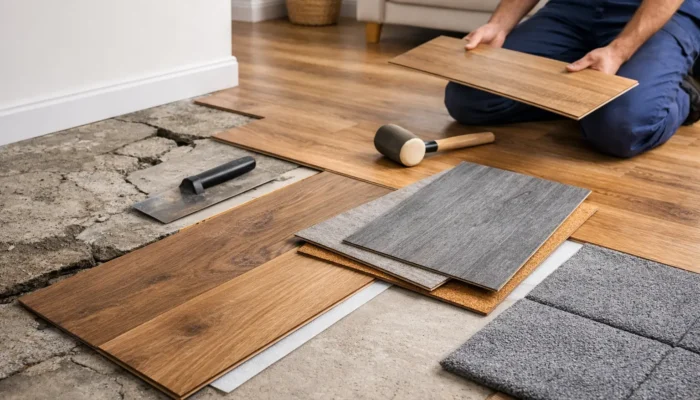
On a wood subfloor, preparation may include securing loose panels, replacing damaged sections, sanding down high spots, or adding an approved patching material to shallow low areas. In some cases, additional plywood may be needed to create a more consistent surface.
On concrete, installers may grind high areas and use a compatible leveling or patching compound in low spots. Moisture testing is especially important before installing vinyl, laminate, or wood-based products over a slab. A floor can look dry while still carrying enough moisture to affect adhesives, flooring materials, or the long-term performance of the installation.
If the issue is caused by foundation movement, a significant structural slope, or ongoing water intrusion, flooring should wait until the underlying condition is addressed. Covering it up may make the room look better briefly, but it will not protect your investment.
Get the Flooring Decision Right Before You Buy
The best time to discover a subfloor issue is before materials are ordered and installation is scheduled. An in-home measurement gives you a clearer answer than guessing from a photo or trying to judge the floor by eye. It also lets you see samples in your own lighting, alongside your cabinets, furniture, wall colors, and daily traffic patterns.
At Choice Floors Northern Colorado, the process is designed to make that decision easier. We bring name-brand options to your home, measure the space, assess the installation conditions, and provide a written estimate that accounts for the work your floor actually needs. That means fewer surprises and a better chance of choosing a floor that fits your style, family, and budget from the start.
A small amount of preparation can be the difference between a floor that simply looks new and one that stays comfortable, quiet, and dependable for years. Before you fall in love with a color or plank width, let the condition of your subfloor help guide the choice.

Related Posts