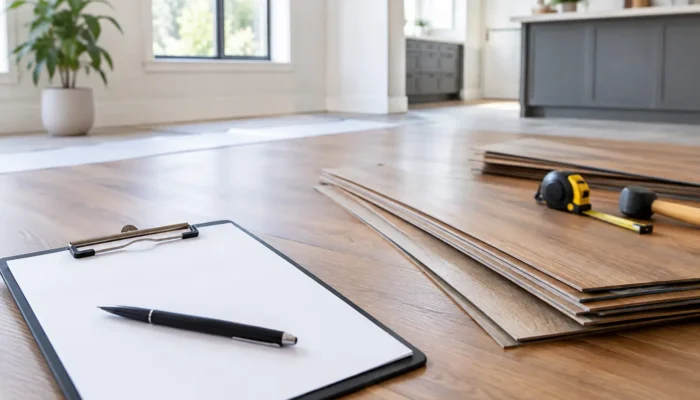
Use this flooring quote guide to compare materials, labor, prep, and warranties, then choose an estimate that fits your Northern Colorado home and budget.

Hardwood Flooring That Works for Real Life
A floor can look beautiful in a showroom and still be the wrong choice for a busy home. Hardwood flooring earns its reputation because it brings real warmth, character, and long-term value to a room, but the best result comes from matching the wood, finish, and installation method to the way your family actually lives.
For homeowners replacing worn carpet, updating a dated main level, or planning a renovation, hardwood can be a smart investment. It also deserves a closer look before you commit. Dogs, children, sunlight, subfloor conditions, budget, and where the flooring will be installed all affect which option makes sense.
Why Homeowners Continue to Choose Hardwood Flooring
Hardwood has a presence that many other materials work hard to imitate. Every plank has natural variation in grain and color, so the finished floor feels personal rather than factory-perfect. It works equally well with traditional trim, modern kitchens, rustic accents, and clean contemporary spaces.
It can also support resale value when it is selected and installed well. Buyers recognize wood floors, and they appreciate a material that can be refinished instead of replaced when styles change or the surface eventually shows wear. That does not mean hardwood is automatically the best choice in every room. It means it remains one of the strongest options for dry, lived-in spaces where appearance and longevity matter.
The practical benefits are just as appealing. Hardwood does not trap pet hair and dust the way carpet can, and regular cleaning is straightforward. A broom, vacuum designed for hard surfaces, and occasional use of a manufacturer-approved cleaner are usually enough to keep it looking good.
Solid or Engineered Hardwood: Choose for the Space
The first decision is not color. It is construction.
Solid hardwood
Solid hardwood is made from one piece of wood. It can usually be sanded and refinished multiple times over its life, making it a proven choice for living rooms, dining rooms, bedrooms, and other above-grade areas. Oak, hickory, maple, and white oak are popular options because each brings a different look and level of hardness.
Solid wood responds to moisture and seasonal humidity changes. Northern Colorado’s dry climate and winter heating can cause normal expansion and contraction, especially if indoor humidity is not managed. Professional installation and proper acclimation help, but solid hardwood is generally not the first recommendation for basements or rooms with frequent moisture exposure.
Engineered hardwood
Engineered hardwood has a real hardwood surface layered over a stable core. It is still genuine wood, not a printed image. Its construction makes it more dimensionally stable than solid planks, which can make it a better fit for wide planks, concrete subfloors, and certain lower-level spaces.
The quality of engineered flooring varies. A product with a thicker wear layer may be refinished in the future, while thinner options may have more limited refinishing potential. This is one reason an in-home consultation is valuable: you can compare actual samples and understand what you are paying for instead of making a decision from a small label in a crowded aisle.
Pick a Species and Finish for Your Household
Wood species affect both appearance and durability. Oak offers a familiar grain pattern and broad style flexibility. White oak is especially popular for its clean grain and ability to take natural, warm, and modern stains beautifully. Hickory has more dramatic character and is one of the harder domestic choices, making it appealing for active households. Maple has a smoother, more subtle grain but can show scratches differently depending on its finish.
Hardness matters, but it is not the whole story. A harder species can resist dents better, yet any wood floor can scratch from moving furniture, grit under shoes, or an energetic dog racing toward the front door. The finish and color often determine how noticeable that everyday wear will be.
For families with children or pets, a low-sheen matte or satin finish is often more forgiving than a high-gloss surface. Natural tones, medium colors, and wood with visible grain can disguise small scratches and dust better than very dark, very light, or ultra-smooth floors. A hand-scraped or wire-brushed texture can also add character while making normal life feel less visible.
If you want a floor that stays pristine without effort, hardwood may not be the right expectation. If you appreciate a floor that develops a little personality over time, it can be exactly right.
Where Hardwood Makes Sense – and Where It Does Not
Hardwood performs beautifully in main living areas, bedrooms, hallways, dining rooms, and home offices. Carrying one wood floor through connected spaces can make a home feel larger and more cohesive, especially in open floor plans.
Kitchens are possible, but they require a realistic approach. Spills should be wiped up promptly, and floor mats near the sink and exterior doors are a good idea. For a homeowner who cooks often, has several pets, or wants the most worry-free choice around water, luxury vinyl may be a more practical alternative.
Bathrooms and laundry rooms are usually better served by waterproof flooring. Even engineered hardwood has limits when standing water, leaks, and humidity are part of the room’s daily environment. Choosing a different material in those spaces is not compromising the design. It is protecting the investment in the rest of the home.
Installation Is What Makes the Floor Feel Finished
A beautiful product can disappoint when installation details are rushed. Before hardwood is installed, the subfloor must be checked for flatness, moisture, and structural soundness. Existing flooring may need to be removed, baseboards may need attention, and doorways and transitions should be planned before the first plank goes down.
Professional installers also account for expansion space at walls and fixed objects. Wood needs room to respond naturally to seasonal conditions. Skipping that detail can lead to gaps, cupping, or boards pressing against one another later.
The direction of the planks matters too. Running boards with the longest sightline can make a room feel more open, while the layout should still respect the subfloor and structural requirements. These are the details that are difficult to judge from a store display but easy to see once the installation is complete.
At Choice Floors Northern Colorado, bringing samples into your home makes those decisions simpler. You can see how the wood looks beside your cabinets, paint, furniture, and natural light while getting a clear measurement and written estimate in the same visit.
Get the Look You Want Without Paying for the Wrong Product
Hardwood pricing is not just about the species name. Plank width, grade, finish, construction, wear layer, installation method, subfloor preparation, and removal of old flooring all contribute to the final investment. A lower material price can stop looking like a bargain if it is not suitable for the room or if installation needs were overlooked.
The goal is not to buy the most expensive floor. It is to choose a quality floor that fits your home, your budget, and your expectations for maintenance. Homeowners can often save 30-60% compared with big-box retail pricing while still choosing name-brand materials and certified installation. That leaves more room in the remodeling budget for the details that make the project feel complete.
Ask to see full-size samples rather than deciding from a tiny swatch. Look at them morning, afternoon, and evening. Stand them next to your trim and cabinets. If you have a pet, place the sample where paws and traffic are most likely to test it. A few minutes of honest comparison can prevent years of second-guessing.
A hardwood floor should feel like it belongs in your home from day one, not like a surface you have to tiptoe around. Choose the version that fits your real routine, then let professional planning and installation do the rest.

Related Posts