
Use this flooring quote guide to compare materials, labor, prep, and warranties, then choose an estimate that fits your Northern Colorado home and budget.
Can Flooring Be Installed Over Tile? What to Know
That dated ceramic tile may be durable, but it can make an entire room feel stuck in another decade. The good news is that can flooring be installed over tile often has a yes-for-an-answer. The better question is whether your specific tile floor is a solid base for the new flooring you want.
Installing over tile can save demolition time, mess, and disposal costs. It can also create problems with floor height, doors, transitions, and long-term performance if the existing surface is not properly evaluated first. A professional in-home measurement makes the difference between a shortcut that pays off and one that creates an expensive redo.
Can Flooring Be Installed Over Tile Safely?
Yes, flooring can be installed over tile when the tile is firmly bonded, reasonably level, and free from major cracks or loose areas. The existing tile effectively becomes part of the subfloor. If it moves, has significant height variations, or shows signs of moisture trouble, covering it does not solve the underlying issue.
Start with the condition of the tile. A few small chips may be repairable. Loose tiles, widespread cracking, hollow spots, or crumbling grout are bigger concerns because they can allow the new floor to flex or fail. Tile that is very uneven may also cause ridges and grout lines to show through certain materials.
Floor height deserves just as much attention. Adding new flooring on top of tile raises the finished floor, sometimes by more than an inch once underlayment is included. That change can affect interior doors, sliding doors, cabinets, dishwasher clearance, stairs, and the transition into nearby rooms. It is always easier to spot these issues before materials are ordered.
The Best Flooring Options Over Tile
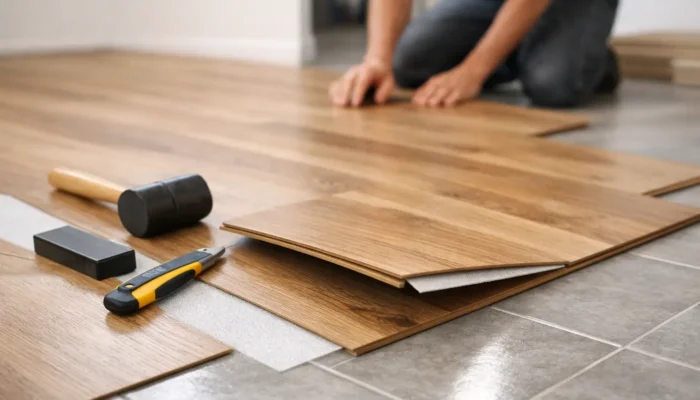
Luxury vinyl plank and luxury vinyl tile are often excellent choices for installation over existing tile. Many products are durable, comfortable underfoot, family-friendly, and available in realistic wood and stone looks. A floating vinyl floor can bridge minor grout lines, though deeper or wider grout joints may need to be filled first. Glue-down vinyl may require more extensive surface preparation because it follows the contours below it.
Laminate can also work over a stable tile floor, especially when the tile is level and the right underlayment is used. It gives homeowners a wide range of wood visuals at a budget-friendly price point. Because laminate is sensitive to moisture, it is usually a better fit for living rooms, bedrooms, hallways, and dry areas than for a bathroom with regular water exposure.
Engineered hardwood may be an option in the right space, but the installation method matters. Floating engineered wood can sometimes be installed over tile, while glue-down installations demand a much flatter, cleaner, and more carefully prepared surface. Solid hardwood is generally not the first choice over tile because of height, attachment, and moisture considerations.
Carpet can be installed over tile in some rooms, particularly bedrooms or finished basements, but it is not always the simplest route. The installer must account for tack strip attachment, padding, floor height, and the condition of the tile beneath. Carpet can add welcome softness and warmth, but it does not make sense in areas where moisture, muddy shoes, pets, or frequent spills are part of everyday life.
When Tile Removal Is the Better Investment
Covering tile is not automatically the best solution. Removal may be the smarter choice when the existing floor is loose, significantly uneven, water-damaged, or already creating clearance problems around doors and appliances.
Bathrooms and kitchens deserve extra caution. If the tile floor has moisture damage around a toilet, dishwasher, sink, or exterior door, the subfloor needs to be inspected rather than covered. A new floor cannot protect a compromised subfloor from getting worse.
Removal may also be worthwhile when you are renovating multiple connected rooms. Adding flooring over tile in one room can leave you with awkward height changes at every doorway. In some homes, removing the tile creates a cleaner, more consistent transition throughout the main level.
There is a budget trade-off here. Demolition adds labor and disposal costs, but it can prevent door trimming, transition complications, and future repairs. The right decision depends on the room, the condition of the tile, and the flooring product you choose.
Preparation Is What Makes the New Floor Last
A quality installation over tile begins with preparation, not with laying the first plank. The tile must be cleaned thoroughly so dust, grease, wax, and residue do not interfere with the materials being installed. Loose tiles should be removed or repaired, and damaged spots need to be stabilized.
Next comes flatness. A floor does not have to be perfectly level to receive new flooring, but it does need to be flat within the product manufacturer’s requirements. This is especially important with click-lock luxury vinyl, laminate, and engineered wood. If the floor dips or rises too sharply, joints can separate, planks can flex, and the surface may wear prematurely.
Grout lines are another key detail. Shallow, narrow grout lines may not require much work under a thicker floating floor. Deep or wide joints often need a patching compound or skim coat so their pattern does not telegraph through the finished surface. This step is easy to overlook, but it has a major effect on how smooth the new floor looks and feels.
A professional installer will also plan for expansion gaps, underlayment, trim, thresholds, and transitions before the job begins. Those finishing details protect the installation and give the room a polished appearance.
Questions to Ask Before You Cover Tile
Before choosing a product, walk through how the room is used. Is it a busy kitchen with kids, pets, and frequent spills? Is it a guest bathroom where water resistance matters most? Is it a cold basement where added warmth and comfort would improve the space? The best flooring is not simply the one that looks good in a sample. It should match your household, budget, and maintenance expectations.
You should also consider the rooms next to it. A new floor may need a reducer or transition strip where it meets hardwood, carpet, or lower flooring. If you want a continuous look across several rooms, measuring the entire area helps prevent surprises after installation starts.
Finally, do not assume every product marketed as waterproof or durable can go over every tile floor without preparation. Product construction, locking systems, warranty requirements, and the condition of the tile all matter. A written estimate should clearly identify the prep work needed, the flooring selected, and any adjustments required for doors or transitions.
Make the Decision in Your Own Home
The easiest way to know whether your tile can stay is to have the floor inspected where it will actually be installed. Samples may look different beside your cabinets, wall color, natural light, and existing finishes. An in-home consultation also allows a flooring professional to measure elevations, check the tile’s condition, and recommend options that fit your family instead of pushing a one-size-fits-all answer.
For Northern Colorado homeowners, Choice Floors Northern Colorado brings name-brand flooring samples, expert guidance, measuring, and installation planning directly to your home. You can compare practical options without making repeated showroom trips, while still getting clear answers about preparation, price, and performance.
Old tile does not always have to mean a demolition project. When the surface is sound and the new material is chosen carefully, installing flooring over tile can be a smart way to refresh a room with less disruption and a result you will enjoy living on every day.

Related Posts