Use this flooring quote guide to compare materials, labor, prep, and warranties, then choose an estimate that fits your Northern Colorado home and budget.
A Guide to Choosing Luxury Vinyl
The wrong floor usually reveals itself fast. You hear every click from the dog’s nails, notice every muddy footprint by the back door, and start regretting the color the minute afternoon light hits it. A smart guide to choosing luxury vinyl should help you avoid that kind of expensive second-guessing and get a floor that actually fits your home, your routine, and your budget.
Luxury vinyl has become a go-to choice for busy households because it solves real problems. It can handle kids, pets, spills, and everyday wear without the high cost or upkeep of some natural materials. But not all luxury vinyl is built the same, and the best option for one home can be the wrong one for another. That is where a little clarity makes a big difference.
What luxury vinyl really is
Luxury vinyl flooring is designed to give you the look of hardwood or stone with more resilience and a lower price point. It usually comes in plank form, often called LVP, or tile form, often called LVT. The printed design layer creates the visual style, while the wear layer and core determine how well the floor holds up over time.
For most homeowners, the appeal is simple. You get attractive flooring that is easier to live with than traditional hardwood in high-traffic areas, and typically more comfortable underfoot than tile. Many products are also waterproof, which makes them especially popular in kitchens, bathrooms, laundry rooms, and basements.
Still, luxury vinyl is not one-size-fits-all. Some products are made for light residential use, while others are built to take a beating. If you only shop by color or price, you can miss the details that matter most.
A guide to choosing luxury vinyl starts with your household
Before you compare colors or plank widths, think about how the room is actually used. A formal dining room and a chaotic family room do not need the same floor. Neither does a guest bathroom compared with a mudroom that sees wet shoes, dog bowls, and daily traffic.
If you have children, pets, or a lot of activity, durability should move to the top of your list. That usually means paying close attention to the wear layer, the texture, and whether the product is truly waterproof or just water-resistant. If comfort matters most, you may care more about the underlayment, sound reduction, and the feel under bare feet.
Budget matters too, but smart budgeting is not just about buying the cheapest product. It is about matching the product to the space so you are not replacing it sooner than expected. Spending a little more on the right floor often saves money and frustration later.
Pay attention to the wear layer
If there is one detail homeowners tend to overlook, it is the wear layer. This is the clear top coating that protects the printed design underneath. A thicker wear layer generally means better protection against scratches, scuffs, and daily wear.
For lower-traffic spaces, a lighter wear layer may be enough. In busy homes with pets, kids, or frequent entertaining, it usually makes sense to step up to a more durable option. This is one of those areas where the cheapest product can become the most expensive mistake.
That does not mean every room needs the heaviest-duty flooring available. It depends on how you live. If the room sees mostly light use, you may be better off investing in a style you love rather than overbuying on performance. But for entryways, kitchens, hallways, and main living areas, durability usually pays off.
Waterproof matters, but so does the core
A lot of homeowners shop for luxury vinyl because they want waterproof flooring, and that is a smart place to start. But waterproof performance is tied to more than marketing language. The construction of the plank matters.
You will often hear about SPC and WPC cores. SPC, or stone plastic composite, tends to be denser and firmer. It is a strong choice for high-traffic areas and can handle subfloor imperfections better in some cases. WPC, or wood plastic composite, usually feels a little softer and warmer underfoot. That extra comfort can be appealing in bedrooms or living spaces where softness matters.
Neither is automatically better. If you want maximum rigidity and durability, SPC may be the better fit. If you want a little more cushion and comfort, WPC may be more appealing. The right answer depends on your subfloor, the room, and your priorities.
Style is more than color
Most homeowners start by looking at color, but style decisions go deeper than light versus dark. The plank width, length, texture, and pattern variation all affect how the floor will look once it is installed across an entire room.
Wider planks can create a more open, updated feel. Narrower planks may feel more traditional. Light tones can make a room feel bigger and help hide some dust, while very dark floors can feel rich and dramatic but may show more debris and scratches. Mid-tone colors are often the safest choice for busy households because they balance warmth and practicality.
Texture matters too. A floor with realistic embossing can look more like natural wood and also help disguise everyday wear. High-gloss finishes tend to show more imperfections. In most homes, a low-sheen finish is easier to live with and still looks polished.
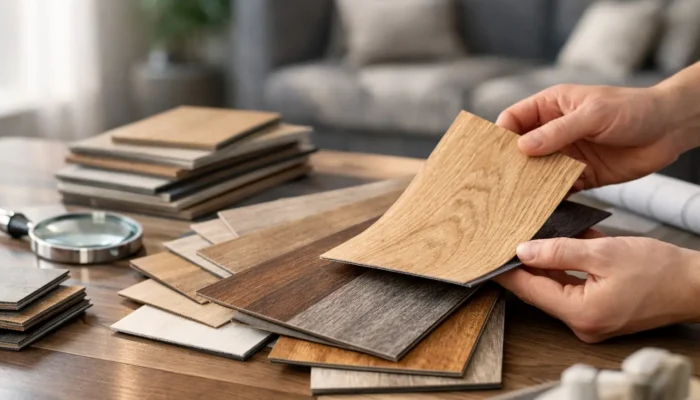
This is one reason in-home shopping makes so much sense. A sample that looks perfect under store lighting can feel completely different in your actual home. Natural light, wall color, cabinets, furniture, and even ceiling height all affect how the floor reads in the space.
Installation method affects performance
Another big factor in this guide to choosing luxury vinyl is how the flooring will be installed. Many luxury vinyl products use a click-lock floating system, while others are glue-down.
Floating floors are popular because they install efficiently and work well in many residential settings. They can be a great fit for homeowners who want a clean, streamlined installation. Glue-down products can offer excellent stability and are often preferred in certain high-traffic applications or where a thinner profile is needed.
The best choice depends on the room, the subfloor, and the product itself. Subfloor prep also matters more than many people realize. Even a quality floor can underperform if it is installed over an uneven or poorly prepared surface. That is why professional measuring and installation are not just conveniences. They protect the investment.
Do not ignore the transition areas
One of the easiest ways to choose the wrong floor is to focus only on one room and forget how it connects to the rest of the house. If your new luxury vinyl meets carpet, tile, or hardwood, those transitions need to make sense visually and practically.
Height differences, stair edges, and doorway transitions all affect the finished look. So does color flow from room to room. A floor that works beautifully in isolation can feel disconnected if it clashes with nearby finishes.
This does not mean everything has to match perfectly. It means the flooring should support the overall feel of the home instead of fighting it. A good design consultation helps catch these issues before installation day.
Price should include the whole project
When homeowners compare flooring prices, they often compare material cost alone. That is only part of the story. The total project cost may include tear-out, subfloor prep, underlayment, trim pieces, stairs, furniture moving, and installation.
That is why low sticker prices can be misleading. A bargain product is not a bargain if it needs extra prep, performs poorly, or does not hold up. The better question is not just what the floor costs. It is what you get for that price.
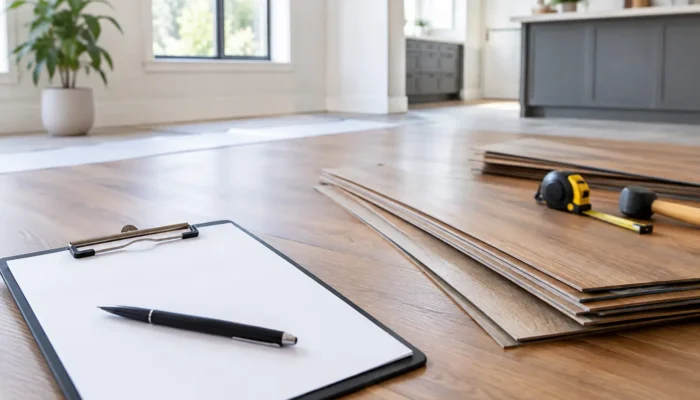
For many families, the best value comes from working with a flooring partner who can bring samples to the home, measure on site, and provide a written estimate based on the actual space. That process is simpler, faster, and much more accurate than guessing from a showroom aisle.
How to know you are choosing well
A good luxury vinyl floor should make daily life easier. It should fit your budget without looking like a compromise. It should stand up to the traffic your household creates, and it should look right in your home, not just under retail lighting.
If you are comparing options and still feel unsure, that is normal. The right choice usually becomes clearer when you see samples in your own rooms, ask the right questions about wear layer and core construction, and get advice based on how your household actually lives. That is exactly why homeowners across Northern Colorado often prefer a simpler process with in-home guidance instead of sorting through endless displays on their own.
The best floor is not the trendiest one or the most expensive one. It is the one that keeps working long after installation day, when the dog runs in from the yard, the kids spill a drink, and your house still looks put together.

Related Posts