
Use this flooring quote guide to compare materials, labor, prep, and warranties, then choose an estimate that fits your Northern Colorado home and budget.
Carpet vs Vinyl Plank: Which Fits Your Home?
The real question in carpet vs vinyl plank is not which floor is better on paper. It is which one works better with your home, your family, and the way you actually live day to day. A busy house with pets and kids has different needs than a quiet guest room, and the right answer usually comes down to comfort, moisture, noise, upkeep, and total project cost.
If you have been walking through big-box aisles trying to compare samples under fluorescent lights, you already know how fast this decision gets frustrating. Both options can look great. Both can fit a remodeling budget. But they solve different problems, and choosing the right one can save you money and regret.
Carpet vs vinyl plank: the biggest difference
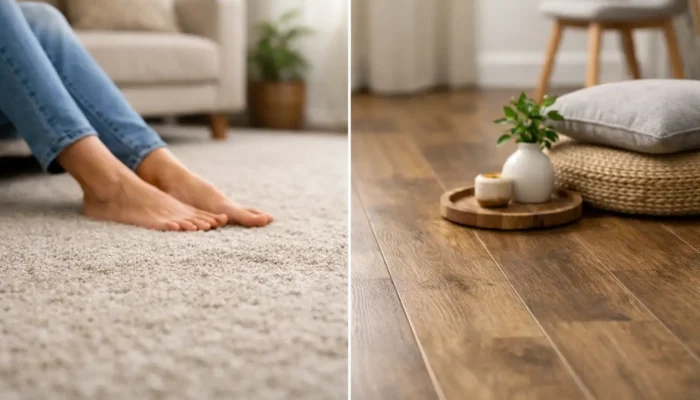
Carpet is about softness, warmth, and quiet. Vinyl plank is about durability, easy cleaning, and a more wood-look finish. That sounds simple, but it matters more than people expect once the floor is installed and daily life takes over.
Carpet gives a room a softer feel the second you step into it. Bedrooms, playrooms, and finished basements often feel more comfortable with carpet because it takes the edge off cold mornings and reduces noise. If comfort is high on your list, carpet has a clear advantage.
Vinyl plank wins when you want a floor that stands up to spills, muddy paws, and constant traffic without much fuss. It is one of the most practical choices for kitchens, living areas, entryways, and homes where cleanup needs to be fast. For many families, that low-maintenance factor is the whole reason vinyl plank ends up being the better fit.
Where carpet makes the most sense
Carpet still earns its place in a lot of homes because it solves a comfort problem that hard surface flooring simply does not. If you like a softer landing underfoot, want a cozier bedroom, or need to take some echo out of an upstairs hallway, carpet does that better than vinyl plank.
It is also often the more budget-friendly way to cover a large area, especially in bedrooms and lower-traffic parts of the home. The price depends on the carpet style, fiber, and pad, but for many homeowners, carpet delivers a comfortable update without pushing the project too far.
Families also choose carpet for safety and sound. It can be easier for little kids to play on, and it softens noise from footsteps, toys, and everyday movement. If your goal is to make a home feel warmer and quieter, carpet is hard to beat.
That said, carpet asks more from you in return. It holds onto dust, dirt, pet hair, and allergens more than hard surface flooring. It can stain. It can trap odors. In homes with pets, heavy traffic, or frequent spills, carpet may start looking tired faster unless it is cleaned regularly and chosen carefully.
Where vinyl plank makes the most sense
Vinyl plank has become a go-to flooring choice for homeowners who want the look of wood without the maintenance and cost that usually come with it. It handles real life well. Spilled drinks, tracked-in dirt, wet shoes, and pet accidents are much less stressful on vinyl plank than they are on carpet.
This is one reason it works so well in main living spaces. If your kitchen opens into a family room, or your entry flows right into the heart of the home, vinyl plank creates a clean, continuous look and makes cleanup simple. A quick sweep and mop usually gets the job done.
It is also a strong option for households with dogs, kids, or both. Many products are built with wear layers designed to resist scratches and scuffs, and waterproof options add another level of protection. That does not mean every vinyl plank product performs the same, but the category is built for busy homes.
The trade-off is comfort. Vinyl plank is firmer underfoot and typically not as warm or quiet as carpet. Some products include attached pad or can be installed with underlayment, which helps, but it still feels like a hard surface floor. If you want cozy over practical, vinyl plank may not give you what you want in every room.
Cost is not just about the material
A lot of homeowners start with one question: which is cheaper? The honest answer is that it depends on the product you choose, the condition of your subfloor, and where the flooring is going.
Carpet can have a lower upfront price in many rooms, especially when you are covering bedrooms or larger areas and want to keep the project affordable. But the long-term cost can shift if the carpet needs replacement sooner because of stains, traffic wear, or pet damage.
Vinyl plank may cost more upfront depending on quality and installation details, but it often pays back in durability and lower maintenance. In a high-use part of the home, that matters. Replacing a worn floor too soon is expensive no matter how good the initial price looked.
This is where in-home measuring and side-by-side sample comparisons make a difference. A flooring decision should not be based on a rough estimate or a tiny display board. It should be based on how the floor looks in your light, how it works with your layout, and what the full installed price actually includes.
Style matters, but lifestyle matters more
People often fall in love with flooring based on appearance first, and that is understandable. Vinyl plank gives you a broad range of wood-look visuals, from light modern tones to deeper, richer colors. It works especially well if you want an updated look that ties multiple rooms together.
Carpet offers a different kind of design value. It adds texture, softness, and a more relaxed feel. In bedrooms and quieter spaces, that can be exactly what a home needs. Carpet also comes in a wide range of colors and patterns, so it is not just a fallback option for budget projects.
Still, style should never be the only factor. The better question is this: how do you want the room to feel after the first week, not just the first day? A floor that looks great but frustrates you during daily cleanup is not the right floor. A floor that feels comfortable but constantly shows wear may not be the right one either.
Carpet vs vinyl plank for pets and kids
For active households, this is usually where the decision becomes clear.
If you have pets that shed, track in dirt, or have the occasional accident, vinyl plank usually has the advantage. It is easier to clean, less likely to hold odor, and generally more forgiving when life gets messy. That is a big reason many homeowners choose it for living rooms, hallways, and other high-traffic spaces.
If you have young children and want a softer place to crawl, sit, and play, carpet still has real appeal. It feels warmer and gentler, and it helps reduce noise. Some families end up doing both – vinyl plank in the main living areas and carpet in bedrooms or play spaces. That combination often gives homeowners the best of both worlds.
The room should decide
Trying to choose one flooring type for the entire house can make the decision harder than it needs to be. Different rooms have different jobs.
Bedrooms are often strong carpet candidates because comfort matters most there. Living rooms, kitchens, dining areas, and entryways often lean toward vinyl plank because they see more mess, moisture, and foot traffic. Basements depend on the conditions. If moisture is a concern, vinyl plank is usually the safer pick. If the basement is dry and the goal is comfort, carpet may still make sense.
This is why a personalized recommendation matters more than a generic showroom pitch. The best flooring plan is not built around trends. It is built around how each part of your home gets used.
Installation can make or break the result
Even the best flooring product can disappoint if it is installed poorly. Seams, transitions, subfloor prep, and layout all affect how the finished floor looks and performs. With vinyl plank especially, subfloor condition matters. Uneven areas can cause problems over time. With carpet, the pad and installation quality affect comfort, wear, and appearance more than many people realize.
That is one reason homeowners often prefer a full-service process instead of buying material first and figuring out the rest later. When you can compare products in your own home, get measured on site, and receive a written estimate before installation is scheduled, the whole decision gets easier and more accurate.
For homeowners in Northern Colorado, that kind of service can save time and help avoid costly mistakes. Choice Floors Northern Colorado brings samples directly to the home, helps match products to budget and lifestyle, and makes it easier to compare real options without the usual showroom runaround.
If you are stuck between comfort and durability, do not force a one-size-fits-all answer. The right floor is the one that supports the way you live now, not the one that sounds best in a sales pitch. When you look at your rooms honestly and compare samples where the floor will actually live, the choice usually gets a lot simpler.

Related Posts